Vegetable Stir-Fry with Frozen Vegetables and Noodles
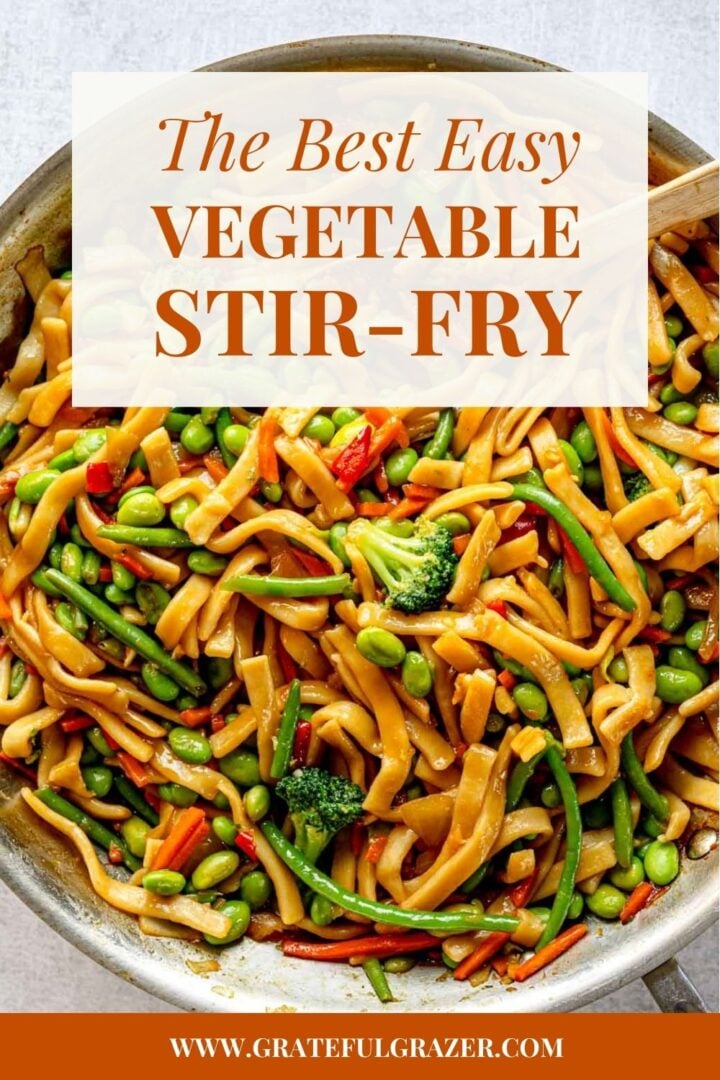
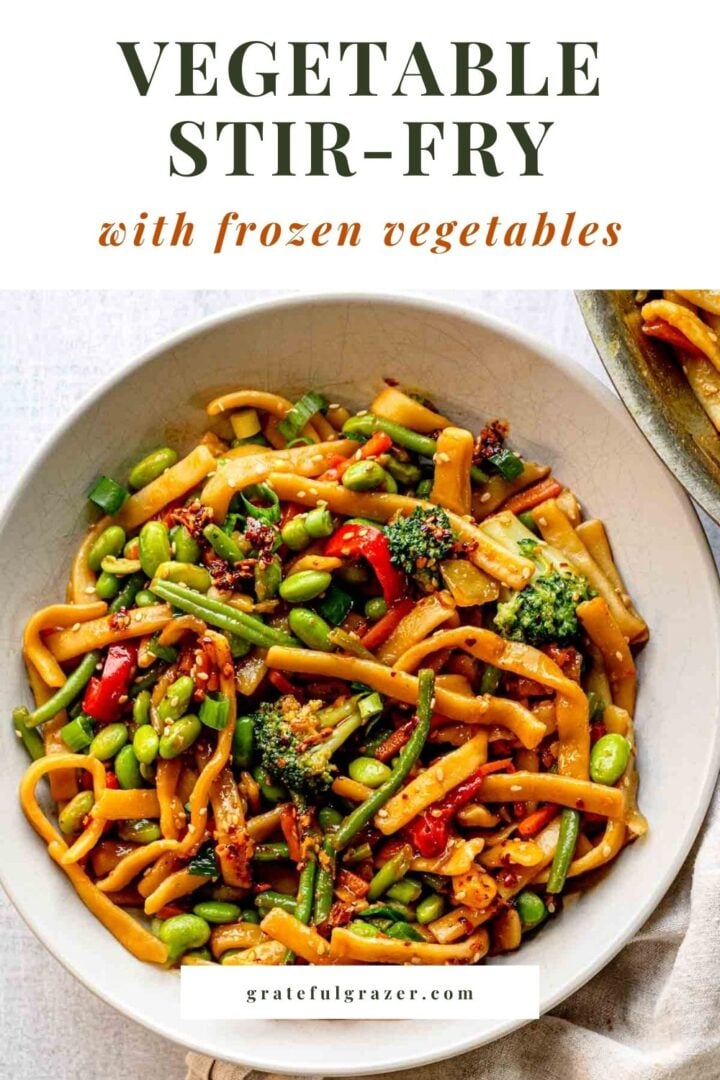
When deciding what to cook feels harder than actually cooking, having a reliable formula matters. This vegetable stir-fry with frozen vegetables and noodles is one of those back-pocket meals. It's flexible, forgiving, and easy to return to when you're not sure what to cook for a simple and nourishing weeknight dinner.

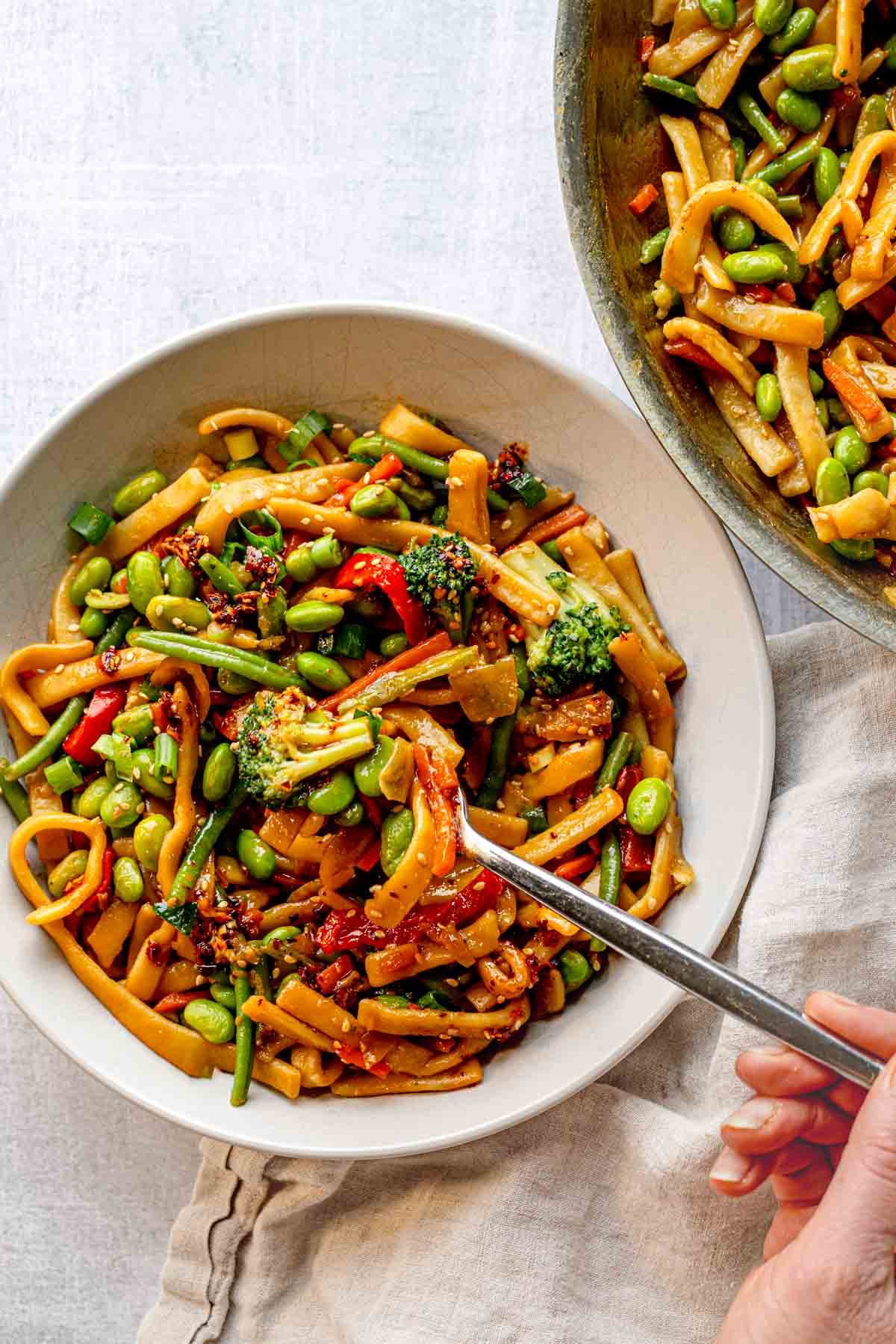
This Chinese-inspired veggie stir-fry is designed for real life: busy evenings, limited groceries, or nights when you want dinner to feel supportive without being complicated. Using frozen stir-fry vegetables and shelled edamame keeps prep minimal while still offering texture, color, and plant-based protein.
As a plant-forward dietitian and mom of young kids, I love recipes like this because they meet you where you are. They're flexible, nourishing, and satisfying, without turning dinner into another thing you have to "get right."
Overwhelmed by "What's for Dinner?"
Get a free guide with 100+ plant-forward meal and snack ideas, organized so you can actually use them on busy weeknights and beyond.
Nutritionally, this meal provides carbohydrates from noodles, protein from edamame, fats from sesame oil, and fiber from vegetables. It supports both satisfaction and nourishment, and it's also flexible enough to adapt to your preferences, appetite, and what you have available, which is exactly the kind of cooking I encourage in an intuitive eating approach.
If you're looking for more weeknight dinner ideas, try my Miso Noodle Soup with Mushrooms, Edamame Crunch Salad with Peanut Dressing, Fried Egg Avocado Toast with Chili Crunch, or Peanut Noodle Bowl with Edamame and Greens. I also put together a full roundup of quick and easy vegetarian dinner recipes here.
Jump to:
Why This Vegetable Stir-Fry Works
Frozen vegetables are often underestimated, but they're one of the most practical tools for building balanced meals, especially if you're busy and want to make food feel easier and less mentally taxing.
If you've read my posts on gentle nutrition or modeling intuitive eating for kids, you know I focus less on perfection and more on consistency, adequacy, and enjoyment. Frozen vegetables help support those goals by being:
- Pre-washed and pre-cut
- Available year-round
- Something you can always keep stocked in your freezer
- Just as nutritious as fresh vegetables
- Designed to cook evenly together
- Easy to portion and customize
Pairing frozen vegetables with edamame, noodles, and stir-fry sauce creates a balanced meal with carbohydrates, protein, and fat. This balance is key for nourishment, satisfaction, and staying power.
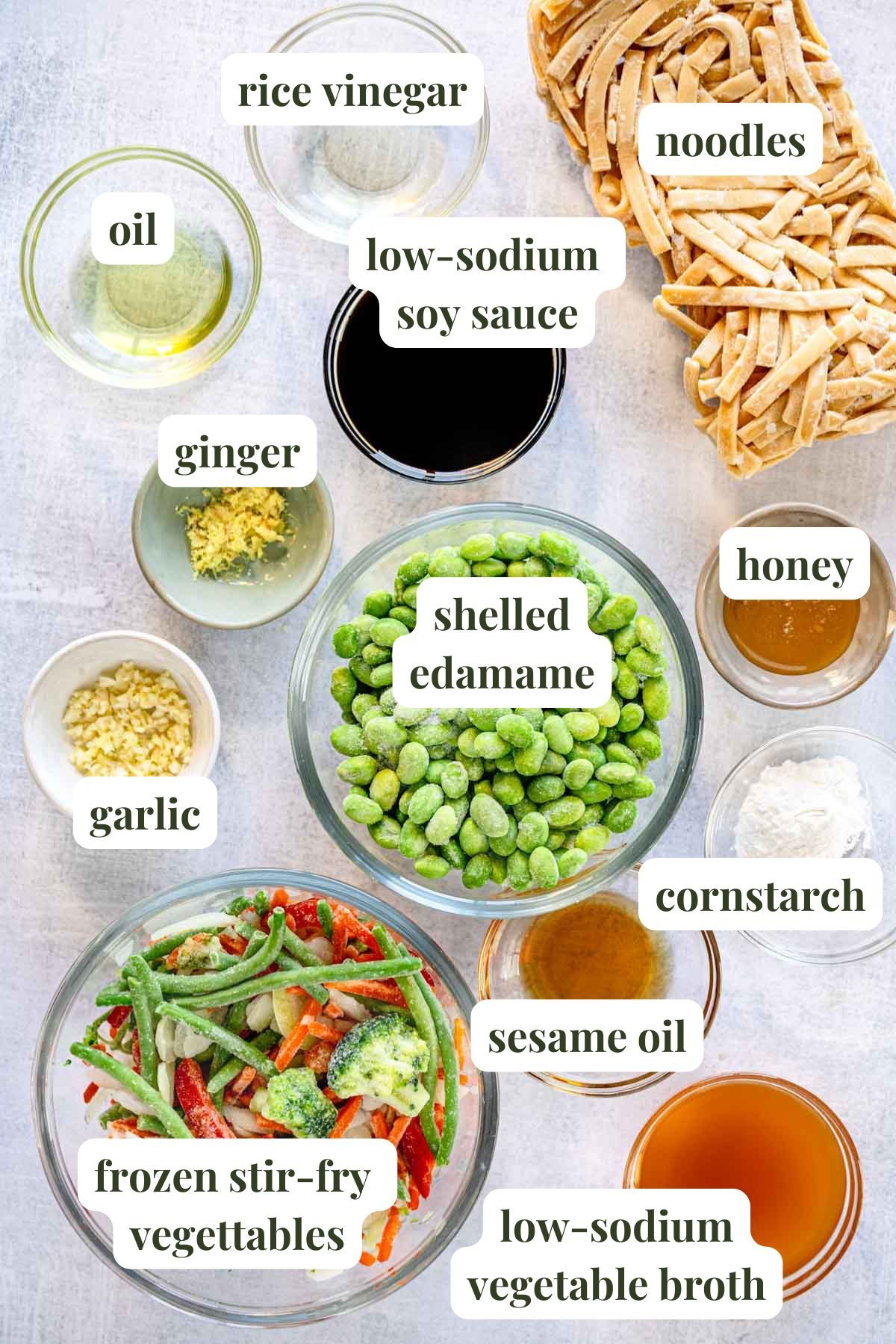
Ingredients
This recipe comes together with a short list of flexible ingredients. The meal prep-friendly stir-fry sauce is a mixture of low-sodium vegetable broth, low-sodium soy sauce or tamari, sesame oil, rice vinegar, ginger, garlic, and honey (or maple syrup for a vegan version). Cornstarch thickens everything so it clings beautifully to the noodles and vegetables. You can keep it mild or optionally add heat with chili flakes, sriracha, or chili crunch.
Save This for Later
Free. Unsubscribe anytime.
For the stir-fry itself, a convenient blend of frozen stir-fry vegetables does most of the work, while frozen shelled edamame (also called mukimame) adds plant-based protein and texture. Egg noodles or rice noodles make this meal hearty, balanced, and comforting.
This recipe is very adaptable depending on what you have on hand. You could easily swap in fresh veggies or serve over rice if you don't want to use noodles.
Instructions
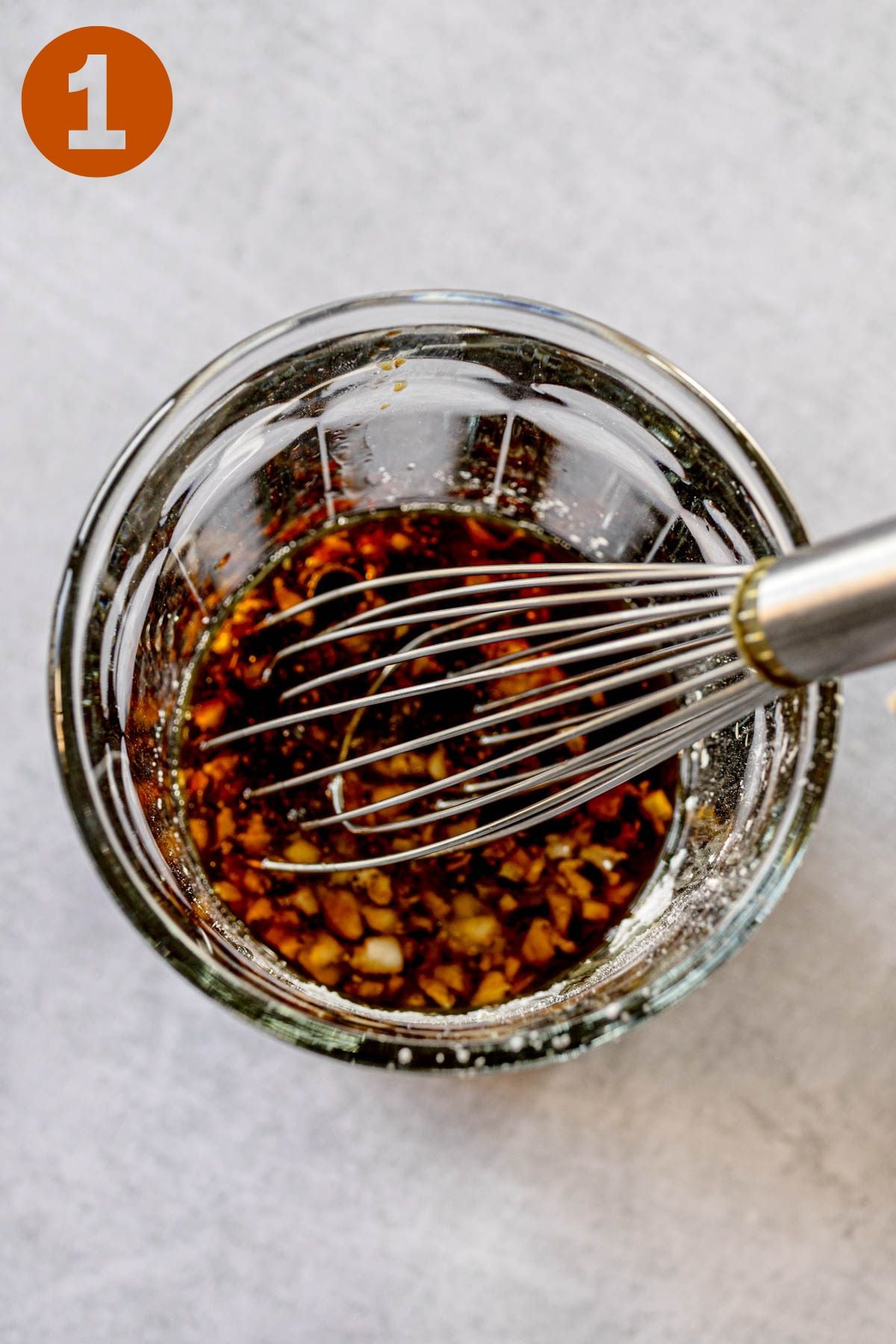
Mix sauce ingredients. (Feel free to make ahead.)
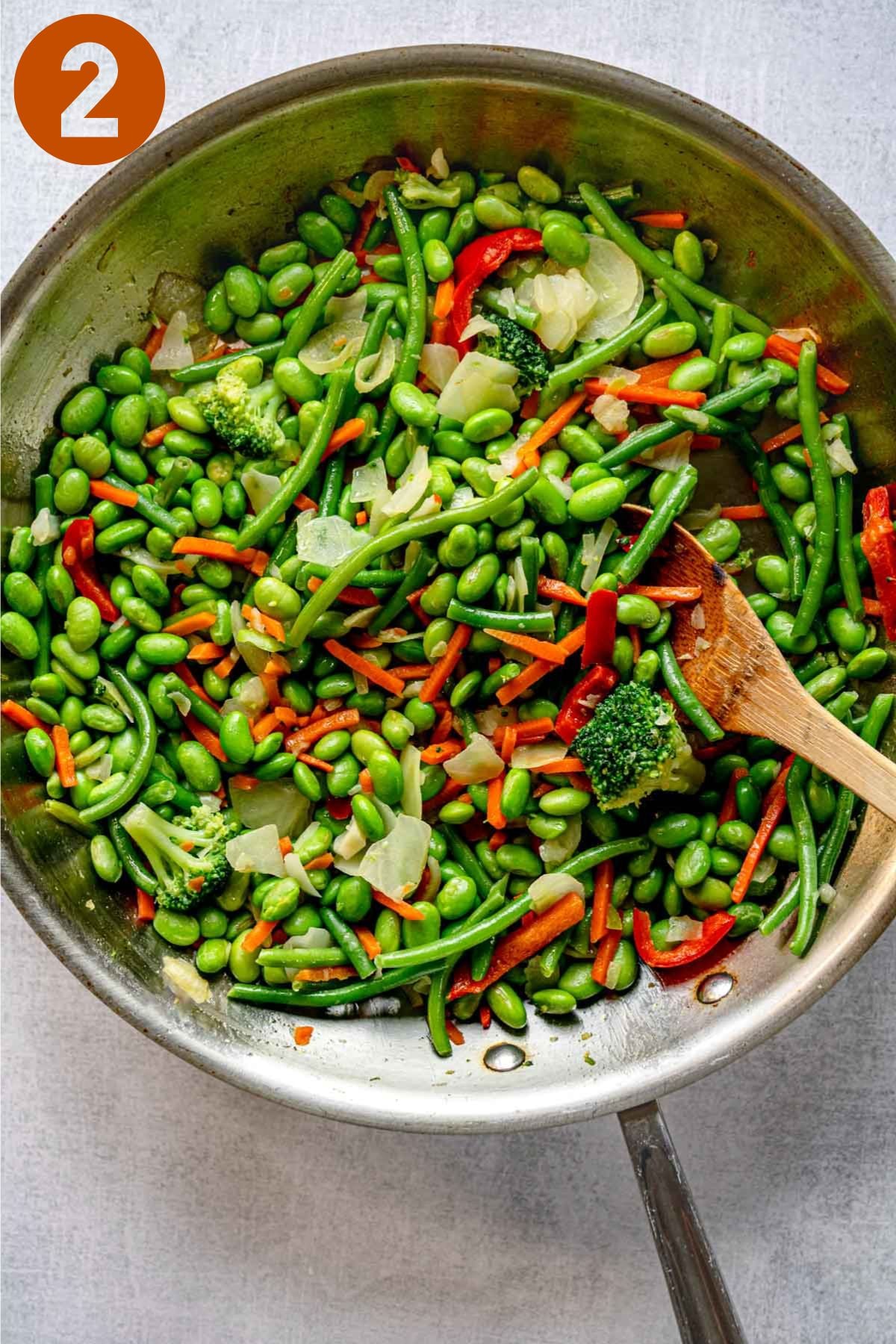
Cook frozen stir-fry vegetables and edamame until very hot.
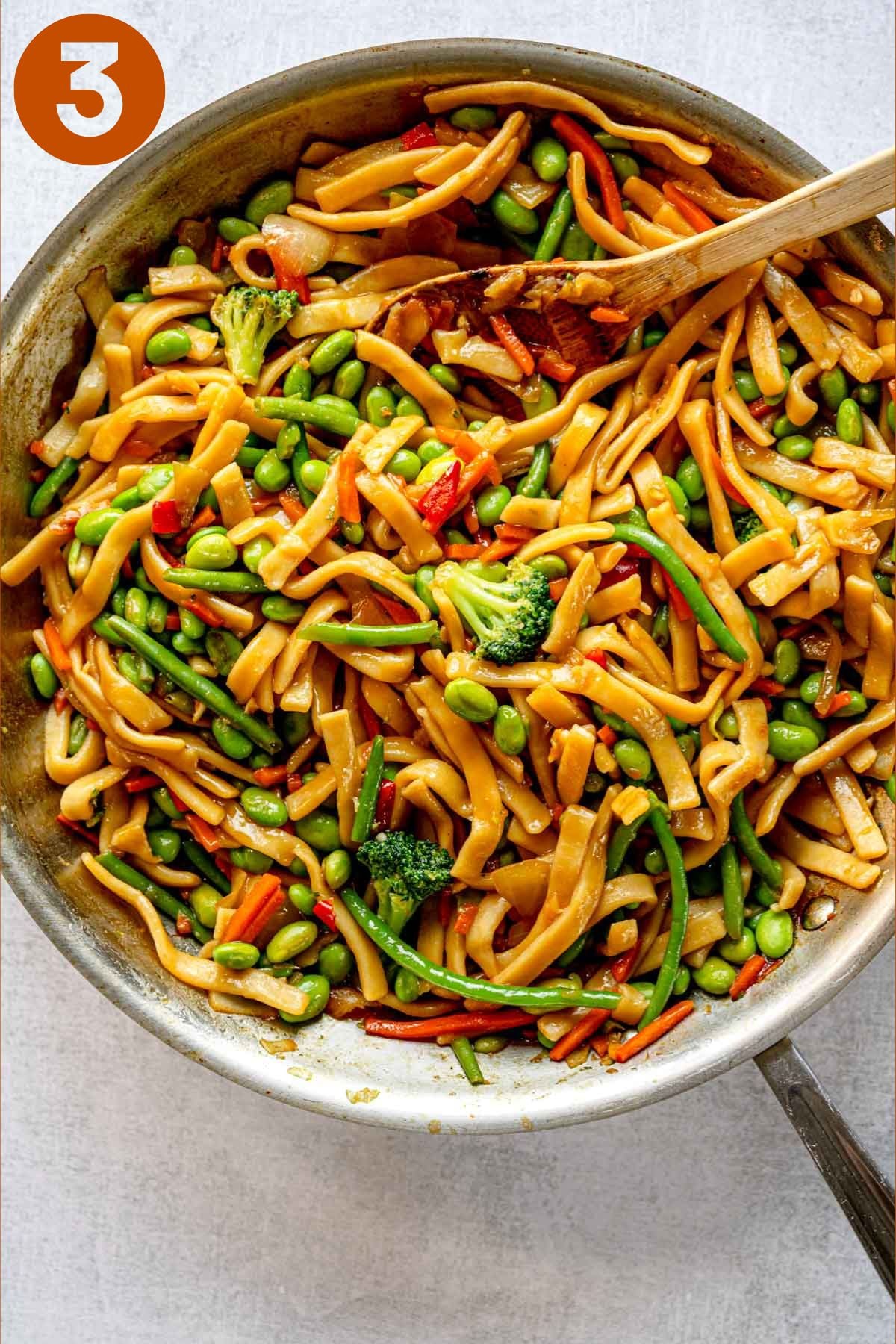
Add the sauce and cooked noodles.
(This is just a quick summary. Find the complete recipe at the end of this post.)
Top Tip
You probably won't need all of the stir-fry sauce included in the recipe. Begin by tossing the vegetables and noodles with about half of the sauce, then taste and add more if needed. If you used regular soy sauce (instead of low-sodium soy sauce or tamari), it's essential to start with less sauce to avoid an overpowering salty flavor. You can store any leftover sauce in the fridge for up to a week or freeze it for up to three months.
Substitutions and Variations
- Noodles: Use ramen, udon, or soba noodles, or substitute rice.
- Protein: Substitute baked tofu for edamame.
- Gluten-free: Use rice noodles and tamari instead of soy sauce.
- Vegetables: Feel free to substitute your favorite fresh veggies. (Cooking time will vary depending on what you choose. Cook until the vegetables are crisp-tender.)
- Garlic and ginger: Use about ¾ teaspoon of garlic powder and ¼ teaspoon of ground ginger instead of fresh.
- Vegan: Use maple syrup instead of honey in the sauce, and use rice noodles instead of egg noodles.
- Authentic: My sauce recipe makes use of pantry staples that are widely available in most American supermarkets. For more authentic flavors, try this Real Chinese Stir-Fry Sauce from Recipe Tin Eats.
Making Ahead and Storage
This stir-fry sauce is an excellent option for making ahead. Store the mixed sauce in the fridge for up to one week. You can also freeze the sauce. Just place it in a freezer-safe container and freeze for up to 3 months. Thaw overnight in the fridge, or heat on the stovetop over low heat until warmed.
This dish can also be fully prepared ahead. For the best texture, undercook the noodles just slightly so they don't get mushy once reheated. Store the prepared stir-fry in an air-tight container in the fridge for up to 5 days, or store in a freezer bag and freeze for up to 3 months. Thaw overnight in the fridge and reheat in the microwave or over low heat on the stovetop until warmed through.
FAQ
Broccoli, bell peppers, carrots, snap peas, mushrooms, cauliflower, bok choy, green beans, cabbage, edamame, and zucchini all work well. Frozen stir-fry blends are especially convenient because they're pre-chopped and designed to cook evenly together.
High heat, a hot pan, and not overcrowding. Let moisture cook off before adding sauce, and keep ingredients moving once the sauce goes in.
Yes. Frozen vegetables work extremely well for stir-fry. They're convenient, nutritious, and accessible.
Add them straight from frozen to a hot pan, don't cover the pan, and cook until excess moisture evaporates before adding the sauce.
📖 Recipe
Vegetable Stir-Fry with Frozen Vegetables and Noodles
Save This Recipe for Later
Free. Unsubscribe anytime.
Equipment
- Large skillet or wok
Ingredients
Stir-Fry Sauce
- ½ cup low-sodium vegetable broth
- ½ cup low-sodium soy sauce or tamari (see note 1)
- 1 tablespoon honey or maple syrup for vegan
- 2 teaspoons sesame oil
- 2 teaspoons rice vinegar
- 2 teaspoons grated fresh ginger
- 3 cloves garlic, minced
- 1 tablespoon cornstarch
Vegetable Stir-Fry:
- 16 ounces egg noodles or rice noodles
- 2 tablespoons grapeseed oil (or another high-heat, neutral-tasting oil of choice)
- 1 (12-ounce) package shelled edamame (also called mukimame)
- 1 (12-ounce) package frozen stir-fry vegetables
Optional for topping:
- Chopped green onions
- Toasted sesame seeds
- Chili crunch or sriracha or crushed red pepper flakes
Instructions
Prepare the sauce:
- Pour vegetable broth, soy sauce or tamari, honey or maple syrup, sesame oil, rice vinegar, ginger, garlic, and cornstarch. Whisk until cornstarch and honey are fully dissolved.
Prepare the noodles:
- Bring a pot of water to a boil and cook noodles according to package instructions, except undercook just slightly so the noodles are still a bit firm. Drain, rinse with cold water, and set aside.
Prepare the stir-fry:
- Add grapeseed oil to large skillet or wok over high heat. Once the pan is hot and the oil is shimmering, add in edamame and stir-fry vegetables. Cook 8 minutes, or until all of the liquid has evaporated and the vegetables are very hot. (Cooking time may vary depending on specific vegetables used.)
- Stir the sauce again and pour it into the pan. Stir in cooked noodles and cook 1 minute, stirring constantly, or until mixture thickens. Taste and gradually add more sauce if needed.
- Serve with green onions, sesame seeds, and chili crunch, crushed red pepper, or Sriracha sauce if desired.
Notes
- Soy sauce: I recommend low-sodium soy sauce or low-sodium tamari to prevent an overpowering salty flavor. You could use regular soy sauce, but it will make the stir-fry sauce quite salty. With regular soy sauce, it's especially important that you start by only adding about half of the stir-fry sauce to the vegetables and noodles. Taste and gradually add more if needed.
- Making ahead and storage: Store prepared stir-fry sauce in the fridge for up to one week, or place it in a freezer-safe container and freeze for up to 3 months. Thaw overnight in the fridge, or heat on the stovetop over low heat until warmed. You can also store the fully prepared stir-fry dish in an air-tight container in the fridge for up to 5 days, or transfer to a freezer bag and freeze for up to 3 months. Thaw overnight in the fridge and reheat in the microwave or over low heat on the stovetop until warmed through.
- Gluten-free: Use rice noodles and gluten-free tamari instead of soy sauce.
- Vegan: Use maple syrup instead of honey and rice noodles instead of egg noodles.
- Nutrition facts are estimates only. The entire stir-fry sauce batch is included in the nutrition facts calculation, even though you probably won't need to use all of it.