Thai Red Curry with Crispy Tofu and Vegetables
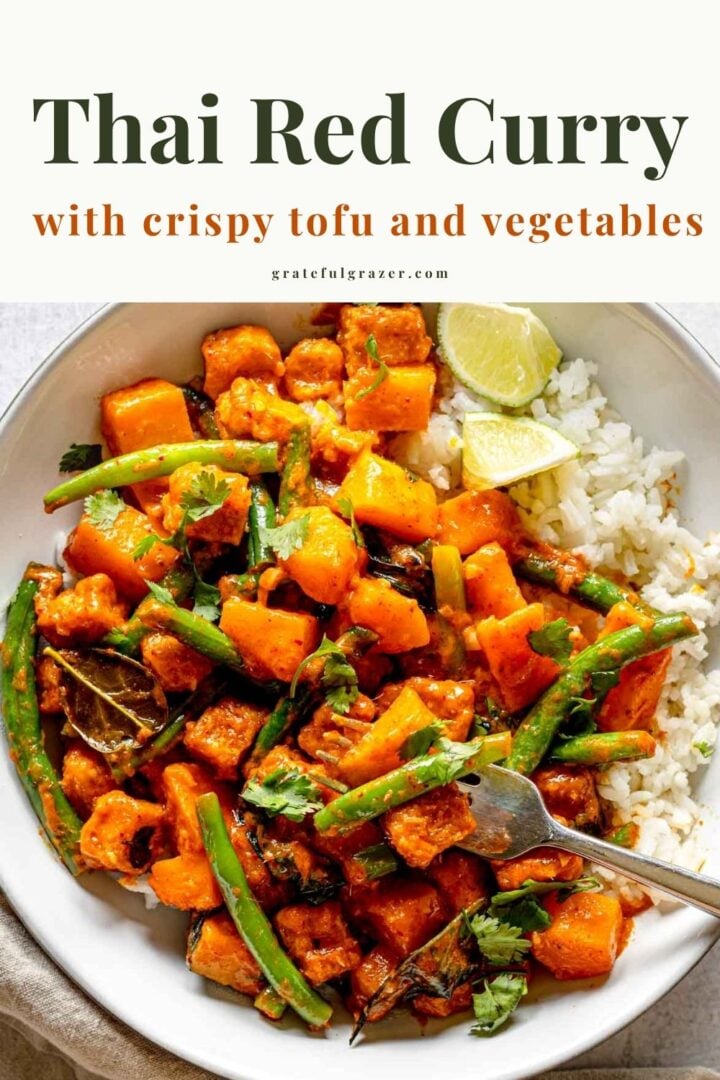
Crispy tofu (prepared in the oven or air fryer), a rich and fragrant coconut milk sauce, and tender butternut squash or sweet potato will make this Thai Red Curry with Tofu one of the most satisfying weeknight dinners in your regular rotation. It comes together in about 50 minutes, most of which is hands-off time, and the flavor payoff is truly impressive for a weeknight meal.
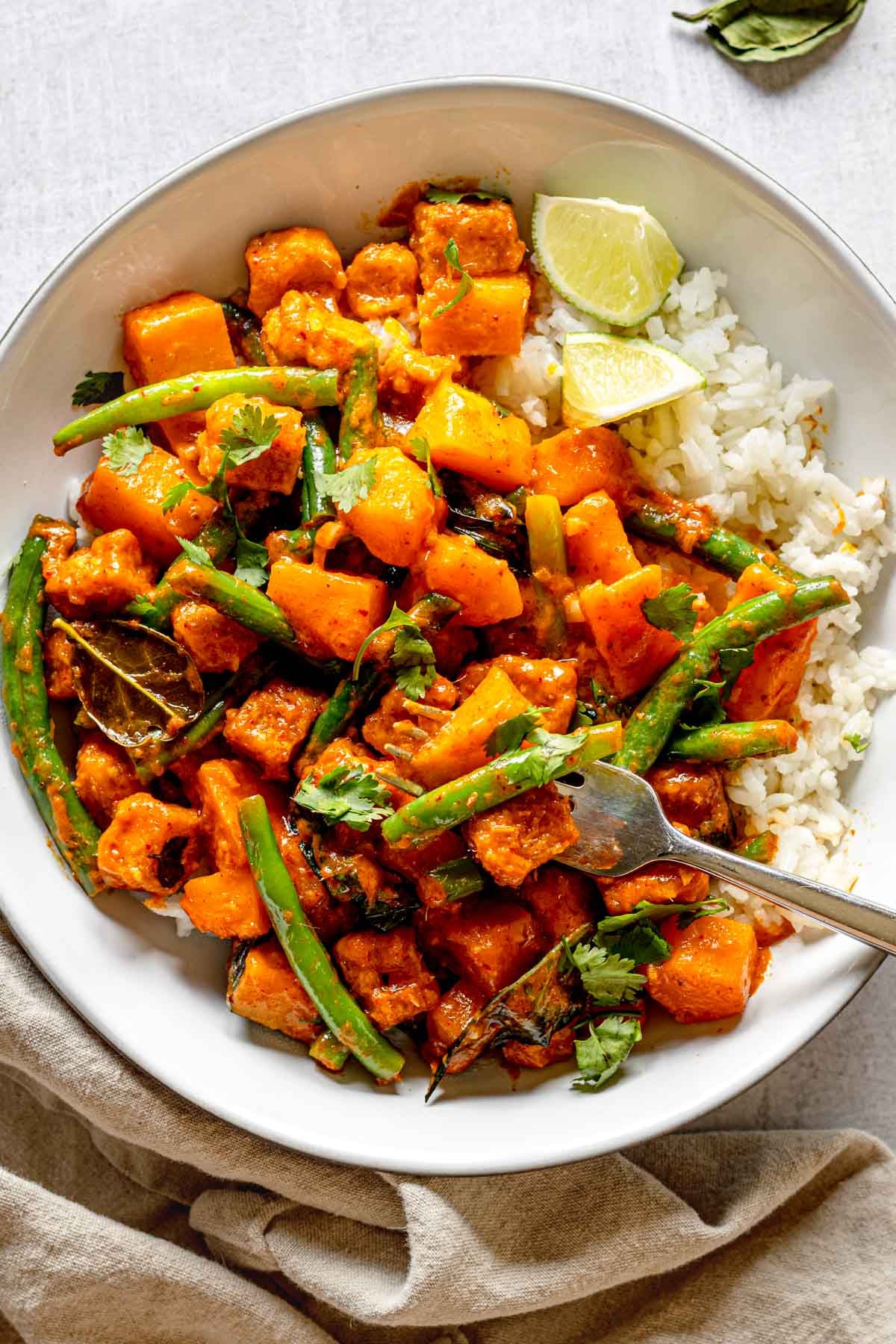
This recipe is adapted from Nag Maehashi's Thai Red Curry with Chicken at RecipeTin Eats, with a plant-based swap, and a tofu technique borrowed from food scientist Wendy Luong that changed how I approach tofu entirely. The result is tofu with a crisp, golden exterior and a tender center that holds up well against a saucy curry, without any pressing or marinating required. If you want to go deeper on the tofu method, I have a full standalone guide here: Crispy Air Fryer Tofu (No Pressing Required).
Overwhelmed by "What's for Dinner?"
Get a free guide with 100+ vegetarian and plant-forward meal and snack ideas, organized so you can actually use them on busy weeknights and beyond.
As a registered dietitian and certified intuitive eating counselor, I think a lot about what makes food satisfying and not just nutritionally adequate. This curry checks every box. It's rich, aromatic, complex, and the kind of meal that leaves you happy you made it.
A note on making this recipe plant-based: As written, this recipe is pescatarian. Many Thai red curry pastes contain shrimp paste or fish paste, and most fish sauces have anchovies. To make it fully plant-based, look for a vegetarian Thai red curry paste and use vegetarian fish sauce. Both are available at well-stocked supermarkets, Asian grocery stores, and online, and they work seamlessly in this recipe.
If you're looking for more flavorful, plant-forward curry recipes, check out my Sweet Potato Lentil Curry with Spinach, Easy Pumpkin Tofu Curry with Coconut Milk, Roasted Eggplant Coconut Curry with Chickpeas, Roasted Butternut Squash Curry with Lentils, or Vegetarian Curry Stuffed Peppers with Lentils.
Jump to:
Why This Recipe Works
A few things make this curry worth making.
- The tofu technique: Most baked or air-fried tofu recipes are decent...but not that exciting. Nothing that makes you reach for more. The pre-boil method changes that. Briefly boiling the tofu in salted water before cooking loosens up its protein structure so it sheds surface moisture more quickly, which means the oven or air fryer spends more time actually browning the tofu instead of just drying it out. Combined with a light cornstarch coating, you get tofu that's golden and crisp on the outside with a tender center. No pressing required. You can read the full breakdown in my Crispy Air Fryer Tofu post.
- Cooking the curry paste: Before any liquid goes into the pan, you cook the curry paste with garlic, ginger, and lemongrass paste for a couple of minutes until it darkens slightly and dries out a bit. This step "blooms" the spices and draws out the flavor in a way that adding paste directly to liquid doesn't achieve. It's a small thing that makes a noticeable difference.
- Full-fat coconut milk: The sauce is rich and creamy because of full-fat coconut milk, and that richness is part of what makes this meal so satisfying. Light coconut milk will work in a pinch, but the sauce will be noticeably thinner. This is one place where I'd encourage you not to substitute unless you really need to.
- Timing the two components together: The tofu goes into the oven or air fryer first, and the curry sauce builds while it cooks. By the time the sauce is thick and the vegetables are tender, the tofu is ready. It's the kind of parallel cooking that makes a 50-minute dinner feel almost effortless.
Ingredients
Here's what you'll need, and a few notes on the key players.
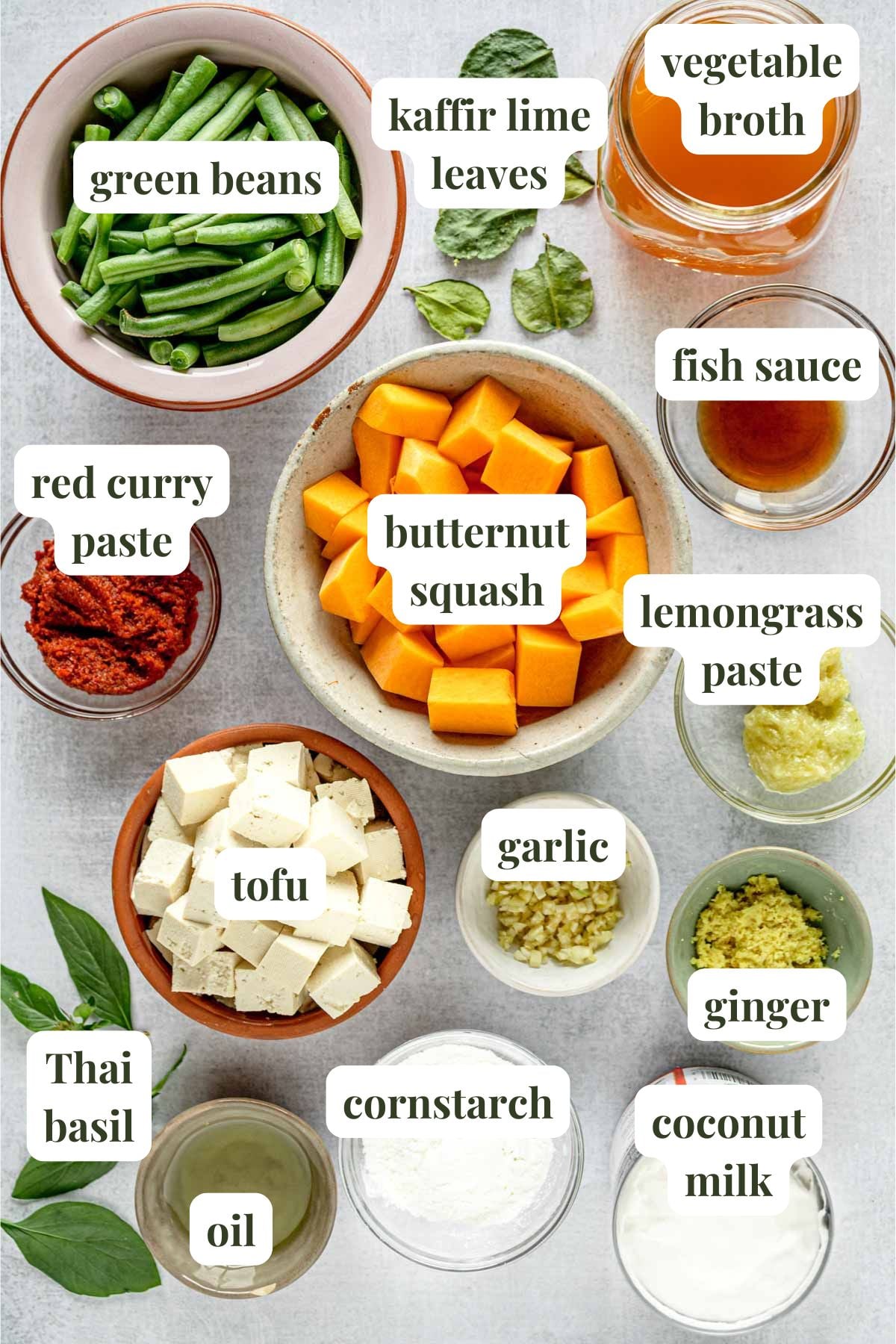
- Extra-firm tofu is the main protein. One standard, 14-ounce block gives you plenty of hearty cubes. Extra-firm tofu has less water content than regular firm tofu and crisps up more reliably. (More on tofu selection below.)
- Thai red curry paste is the flavor backbone of the dish. Store-bought works fine. Just note that different brands vary significantly in heat level and depth of flavor. Start with 3-4 tablespoons if you're unsure and add more from there. Maesri (sold in Asian grocery stores and online) is a personal favorite. Thai Kitchen is milder and more widely available. If you want to keep this recipe plant-based, look for a vegetarian Thai red curry paste made without shrimp paste or fish paste. Both Maesri and Thai Kitchen have vegetarian versions at the time of this writing.
- Full-fat coconut milk creates the rich, creamy sauce. One standard 13.5-ounce can is all you need.
- Vegetable broth builds out the sauce and helps dissolve the curry paste. Low-sodium gives you more control over the final seasoning. Chicken broth can also work, assuming you don't need the recipe to be plant-based.
- Butternut squash or sweet potato both work equally well. They turn silky and sweet as they cook in the sauce and soak up the curry. Frozen can be substituted in a pinch.
- Green beans add color and crisp texture. Swap in long snake beans, snap peas, or asparagus if that's what you have.
- Kaffir lime leaves and lemongrass paste are optional but worth seeking out, even if you have to make a special stop or order online. They add a bright, citrusy floral note that makes the curry taste much more layered. Kaffir lime leaves are available fresh at Asian grocery stores or dried online. Lemongrass paste comes in tubes in the produce section of many well-stocked supermarkets. If you can't find either, the curry is still very good without them.
- Thai basil is stirred in at the end. Regular basil works as a substitute if needed.
Making Crispy Tofu
If you've had hit-or-miss experiences with tofu in the past, make sure you're not making one of these common mistakes: not removing enough moisture before cooking, not seasoning it well, or serving it on its own instead of as part of a flavorful, satisfying meal. This recipe addresses all three.
What kind of tofu to buy
For this recipe, you want extra-firm tofu, sold in water-packed blocks in the refrigerated section. Extra-firm tofu has less water content than regular firm and will crisp up more reliably. If you can find super-firm tofu (the vacuum-packed kind with no water, sometimes labeled "high-protein tofu"), that can work, too.
Avoid silken, soft, or medium tofu for this recipe. They have too much water and won't hold their shape through boiling and baking.
Do I need to press it first?
No. The pre-boil step does the work for you, and it's even more effective than pressing alone. Pressing typically takes 15 minutes to an hour or more, depending on your method. Boiling removes moisture more quickly by working on the tofu's protein structure from the inside. You'll still pat it dry after boiling, but you can skip the press entirely. If you've relied on my How to Press Tofu guide in the past, keep it for other recipes, but you won't need it here.
Oven vs. air fryer
Save This for Later
Free. Unsubscribe anytime.
Both work well for this recipe. The air fryer is faster and produces tofu that's slightly crispier due to the concentrated circulating heat. The oven gives you more space, which matters since crowding the pan prevents browning. If you're cooking for a larger group and want to avoid batches, the oven is probably the more practical choice. Either way, give each piece of tofu as much space as possible and don't skip the preheat. Full instructions for both methods are in the recipe card.
A note on soy safety
Tofu gets a lot of mixed messages thrown at it, often wrapped up in diet culture misinformation about soy, hormones, and health claims. As an RD, I recommend tofu because it's a satisfying, versatile, and nutritious food that has been eaten safely for thousands of years. Harvard's Nutrition Source has a thorough and balanced overview of the research if you want to read more. For most people, it's a wonderful addition to a plant-forward way of eating. And when it's prepared well, it's also just really delicious.
How Spicy is This?
Thai red curry is meant to have warmth and heat, but the spice level doesn't have to be overwhelming. The spiciness depends almost entirely on which curry paste brand you use and how much of it you add.
I find that Maesri has a more noticeable kick, while Thai Kitchen is milder. I haven't tried it, but have read that Trader Joe's falls somewhere in between. Start with 3-4 tablespoons, taste the sauce as it cooks, and add more curry paste if you want more heat.
If your curry ends up too spicy, stir in a little more coconut milk, add a squeeze of lime juice, and serve with plenty of rice. All of these help balance the heat without watering down the flavor too much.
If you want more heat, add more curry paste during the cooking stage, slice in some fresh red chili, or finish with a drizzle of chili oil at serving.
Instructions
This recipe has two components that run in parallel: the tofu and the curry sauce. You'll start the tofu first, then build the curry while it cooks so everything is ready at the same time. Here's a brief summary, with more detailed instructions in the recipe card at the end of the post.
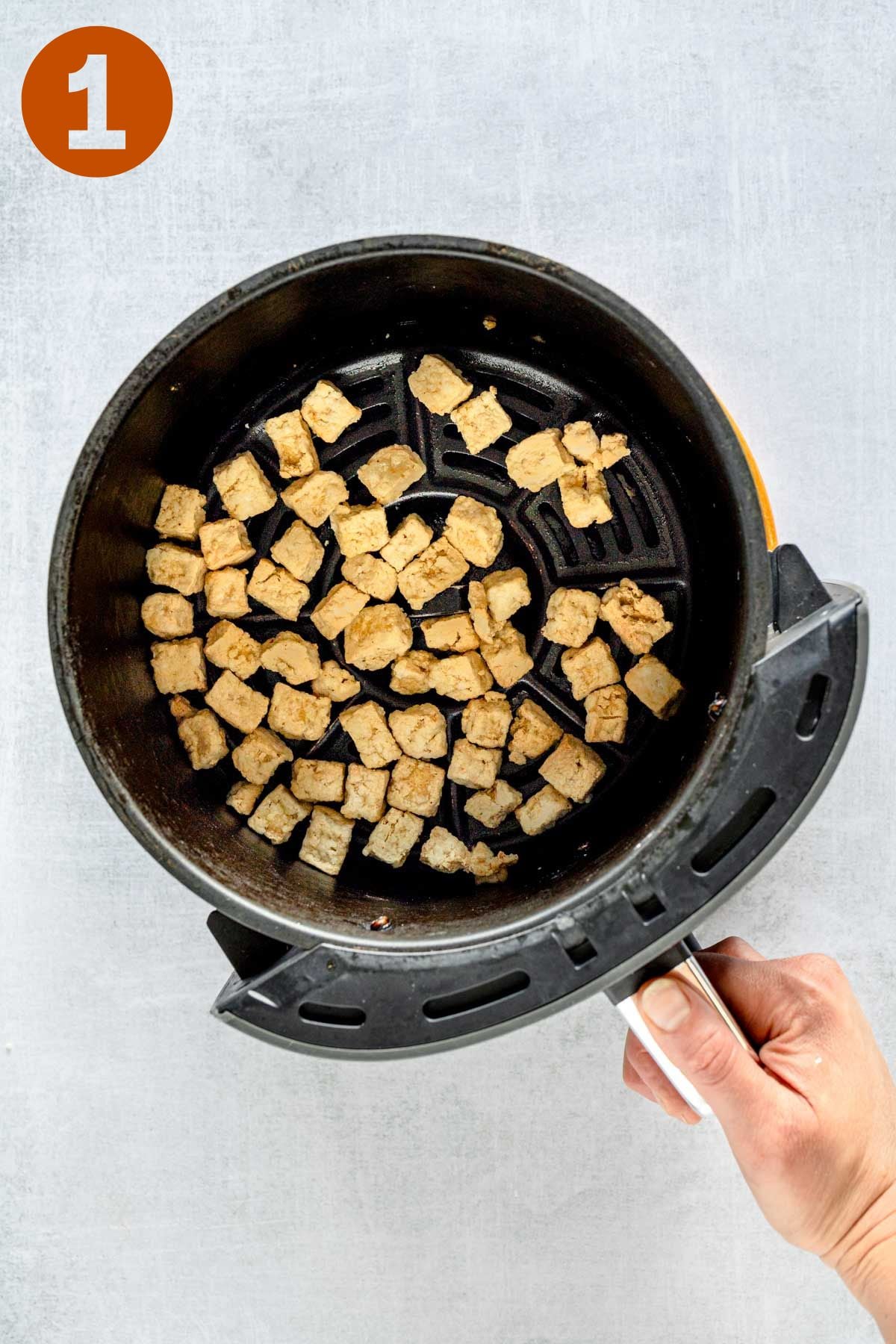
Pre-boil tofu cubes in salted water, drain and pat dry, toss with cornstarch and oil, then bake or air fry until golden.
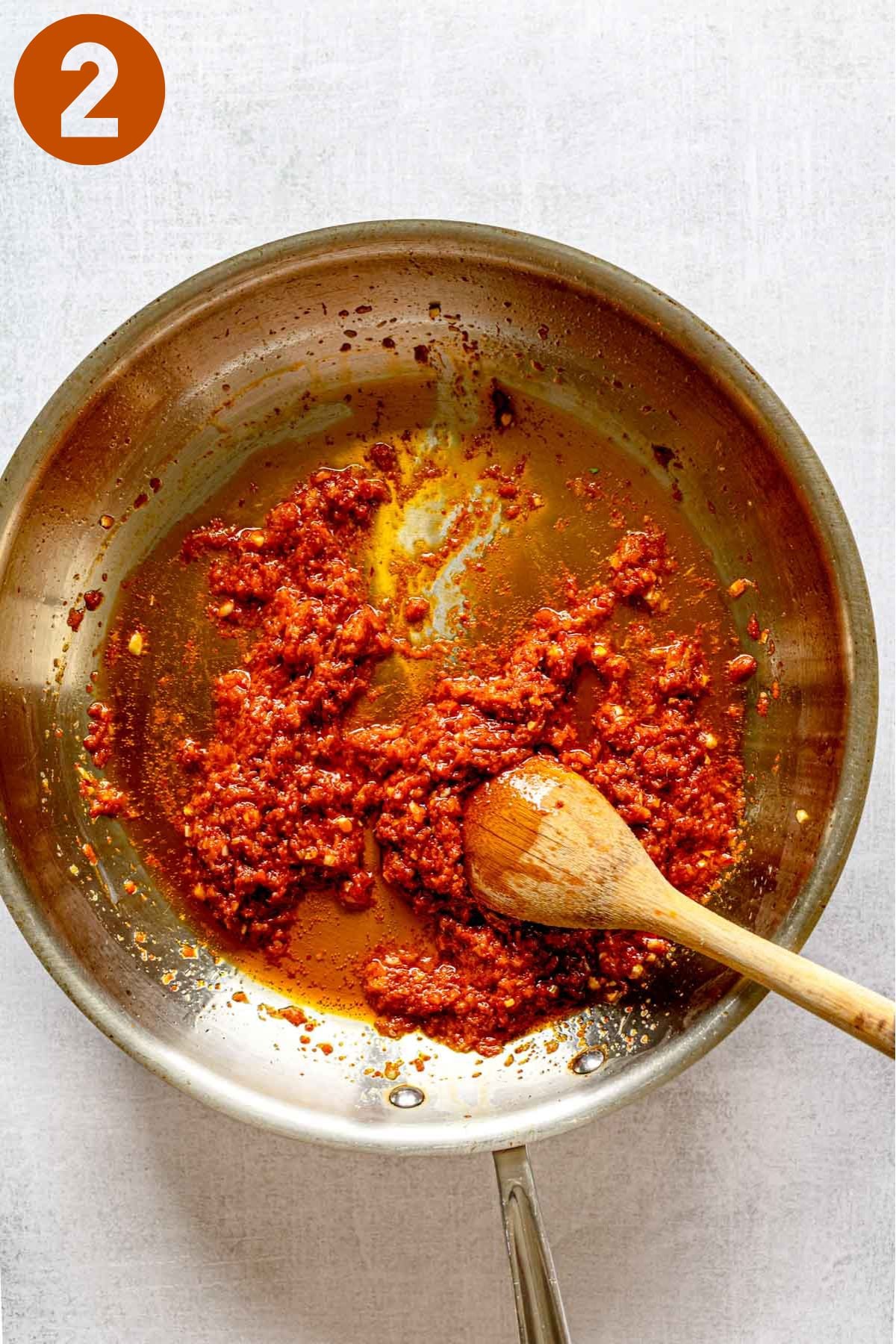
Heat the curry paste with garlic, ginger, and lemongrass paste until it darkens and dries out a bit.
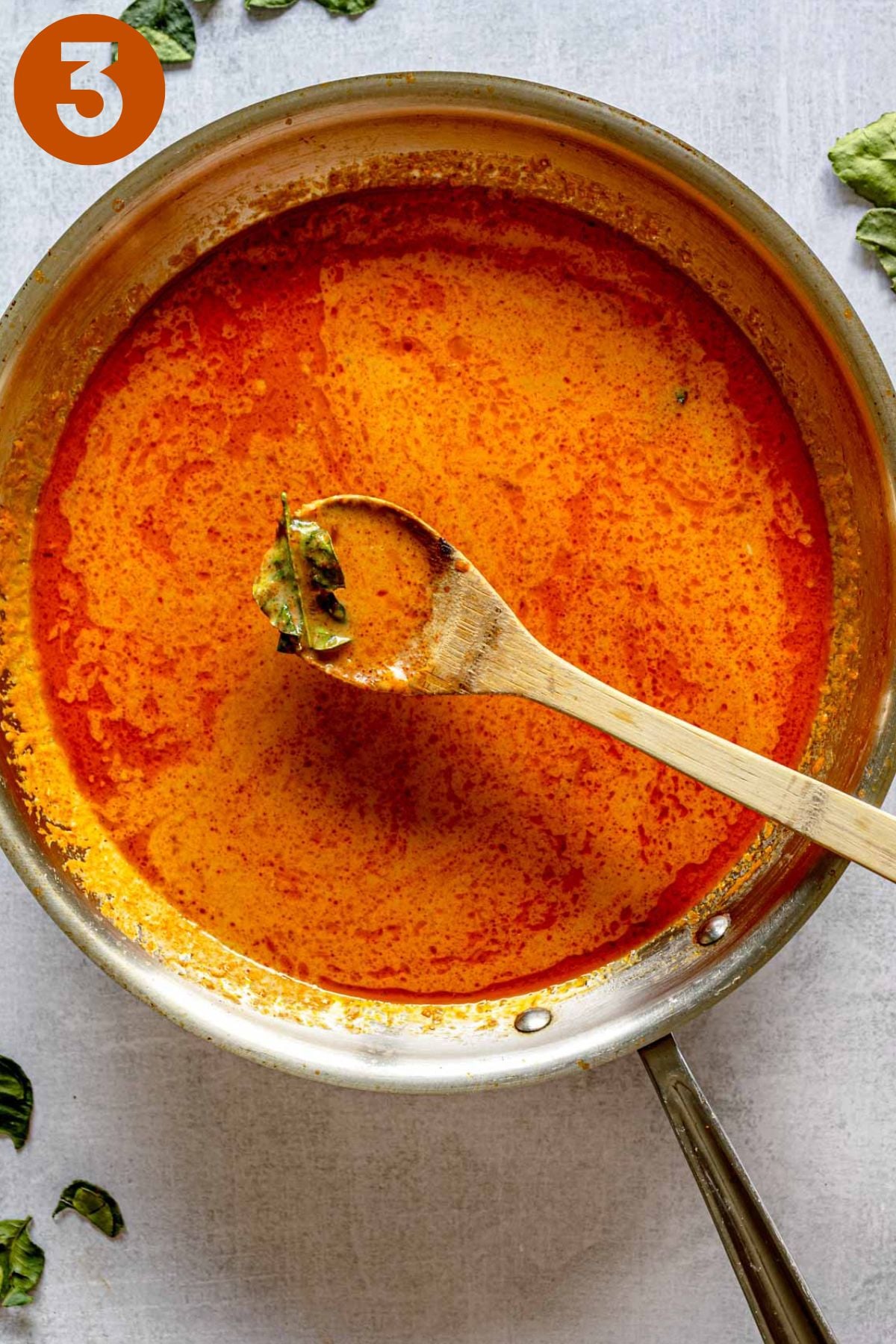
Stir in broth, coconut milk, kaffir lime leaves, and fish sauce.
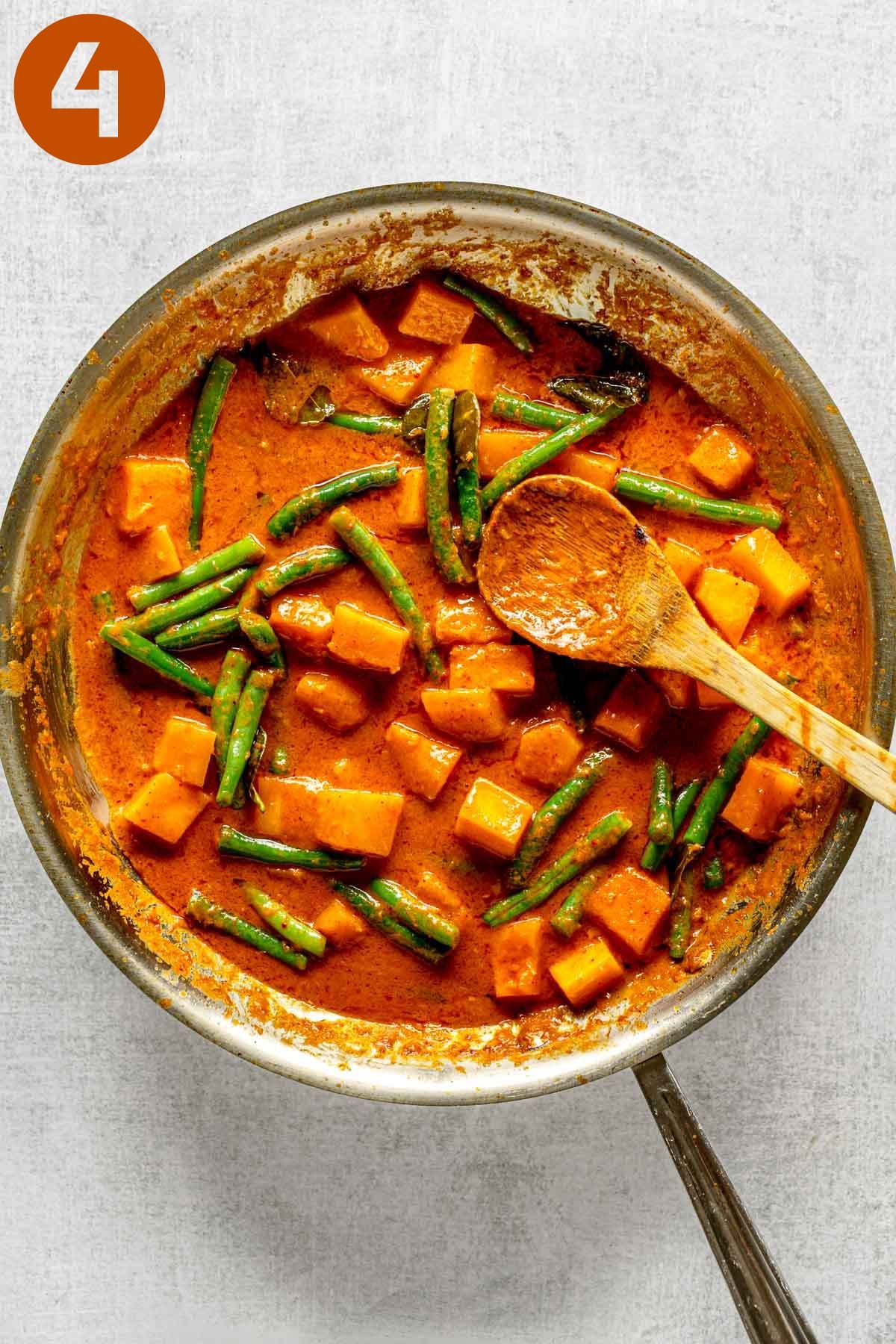
Cook the squash or sweet potato and green beans. Stir in the cooked tofu and Thai basil immediately before serving.
Tofu Tip
The crispy tofu will gradually soften once it's in contact with the curry sauce. Keep the tofu separate from the curry until serving to maintain its texture as much as possible. You can also serve it on top of the curry sauce (instead of mixing it in) for maximum crispiness.
Substitutions
- Tofu: Extra-firm tofu is ideal. Silken or soft tofu won't hold up well in this recipe. For a different protein, canned chickpeas or cubed tempeh can be baked or air-fried the same way as the tofu. (Watch closely as you may need to adjust the cooking times.)
- Vegetables: Butternut squash and sweet potato are interchangeable in this recipe. I prefer fresh for its texture, but frozen also works in a pinch. You could also substitute regular potato or Thai eggplant. For the green beans, long beans (snake beans), snap peas, or asparagus work well as alternatives.
- Curry paste: You can use green or yellow curry paste instead of red. Green curry is typically spicier and fresher. Yellow curry is milder and warmer in flavor. The technique is the same.
- Fish sauce: Vegetarian fish sauce is the most seamless swap. Soy sauce or tamari could work in a pinch, though the flavor will change slightly.
- Kaffir lime leaves: It's okay to skip them if you can't find them, but they're worth seeking out. A little lime zest and juice stirred in at the end can add brightness in their place.
- Lemongrass paste: Substitute 1 teaspoon of finely minced fresh lemongrass or leave it out entirely if you must.
- Thai basil: Regular basil or cilantro can also work in a pinch.
Serving Suggestions
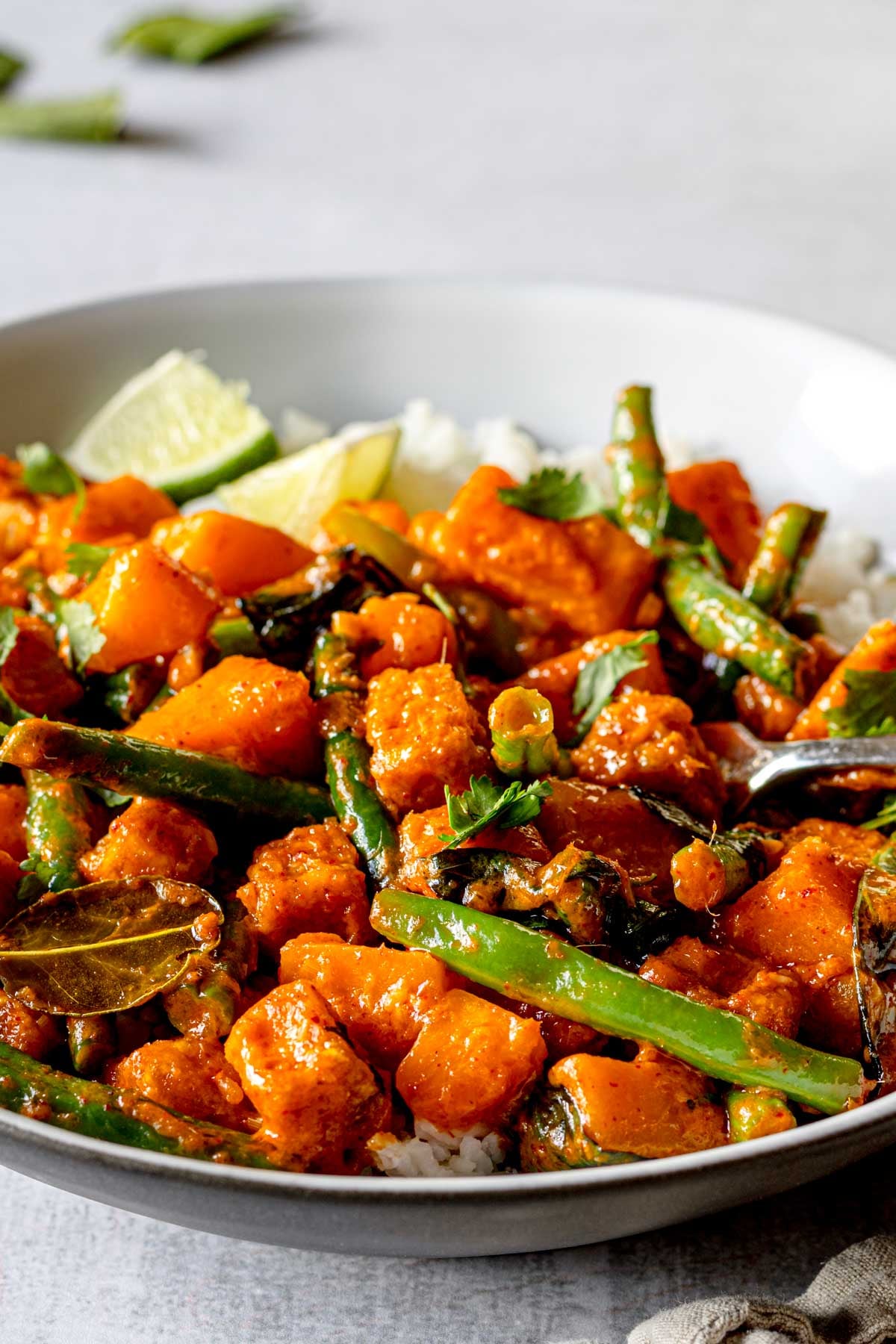
This curry is a complete meal served over cooked rice (steamed jasmine rice would be the classic pairing). Brown rice, rice noodles, or plain white rice all work well, too. The sauce is good enough that you'll want something to soak it up.
If you're building out a bigger spread, a simple cucumber salad with rice vinegar is a nice contrast to the richness of the curry (check out my guide to quick pickling vegetables here).
As an RD and intuitive eating counselor, I'm a big believer in building meals that feel complete and satisfying, with a good mix of textures, flavors, and components that make you want to sit down and enjoy eating. This curry does that practically on its own, and a simple side or bowl of rice alongside rounds it out beautifully. If you want to read more about building satisfying plant-forward meals, my post, How to Build a Filling Vegetarian Meal, goes deeper on this.
Making Ahead and Storage
- Tofu: Baked or air-fried tofu keeps in an airtight container in the fridge for up to 4 days. Reheat in a 400ºF oven for 5-8 minutes or an air fryer at 375ºF for 3-5 minutes to restore crispness. Store it separately from the curry sauce.
- Curry sauce: Stores well in an airtight container in the fridge for up to 5 days. Reheat gently on the stovetop over low to medium heat, adding a splash of broth or water if it has thickened too much. Avoid boiling it hard during reheating, which can overcook the vegetables.
- Freezing: The curry sauce (without tofu) freezes well for up to 3 months. Let it cool completely, transfer to a freezer-safe container, and thaw overnight in the fridge before reheating on the stovetop. For best results, make a fresh batch of the tofu when you're ready to serve.
FAQs
Thai red curry is made with red curry paste, coconut milk, and fish sauce, with vegetables and protein simmered in the sauce. Common additions include squash, green beans, eggplant, or Thai basil.
Generally, Thai green curry is hotter than red. Green curry paste is made with fresh green chillies, while red curry paste uses dried red chillies, which tend to produce a slightly deeper, more mellow heat.
This curry is made from vegetables and other simple ingredients and is truly satisfying. It tastes good, leaves you satisfied, and fits into a varied, enjoyable way of eating.
📖 Recipe
Thai Red Curry with Crispy Tofu and Vegetables
Save This Recipe for Later
Free. Unsubscribe anytime.
Equipment
- Knife and cutting board
- Large pot
- Air fryer or oven
- large skillet or wok
Ingredients
For the tofu:
- 1 (14-ounce) block extra-firm tofu, cut into ¾-inch cubes
- Salted water for boiling (1 tablespoon salt per 4 cups water)
- 3 tablespoons cornstarch
- 1 tablespoon grapeseed oil (or neutral oil of choice)
For the curry:
- 3 tablespoons grapeseed oil (or neutral oil of choice)
- 4 tablespoons Thai red curry paste (vegetarian if needed)
- 3 large garlic cloves, minced
- 1 tablespoon fresh ginger, finely grated
- 2 tablespoons lemongrass paste, optional
- 1 cup low-sodium vegetable broth
- 1 (14-ounce) can full-fat coconut milk
- 6 kaffir lime leaves, optional
- 2 teaspoons fish sauce (vegetarian if needed)
- 1 ½ cups cubed butternut squash or sweet potato (¾-inch pieces)
- 1 ½ cups green beans, trimmed and cut into 2-inch pieces
- ¼ cup Thai basil leaves, torn if large
Optional for serving:
- Cooked rice
- Fresh cilantro
- Lime wedges
Instructions
Cook the tofu:
- If using the oven, preheat to 400°F (200°C) and line a baking sheet with parchment paper. If using an air fryer, preheat to 375°F (190°C) for at least 5 minutes.
- Bring a medium pot of salted water to a rolling boil. Gently lower the tofu cubes in using a slotted spoon. Bring back to a boil and cook for 5 minutes. Remove tofu with a slotted spoon, let drain for 30 to 60 seconds, then pat very dry with a clean kitchen towel.
- Transfer the tofu to a large bowl. Add the cornstarch and toss gently until each piece is lightly and evenly coated. Tap off any excess. Drizzle with the oil and toss again.
- Oven Method: Spread in a single layer on the prepared baking sheet, leaving at least ½ inch between each piece. Bake for 12 to 15 minutes, flip each piece, then bake for another 12 to 15 minutes, or until deep golden brown and crisp at the edges.
- Air Fryer Method: Arrange in a single layer in the basket without touching, working in batches if needed. Air fry for 12 minutes, shake or turn the pieces, then continue for 12 minutes, or until evenly golden brown.
- Remove from the oven or air fryer and let cool for 2 to 3 minutes. The tofu will continue to crisp as it cools. Set aside.
Make the curry:
- While tofu is cooking, prepare the curry. Heat the grapseeed oil in a large heavy skillet over medium-high heat. Add the curry paste, garlic, ginger, and lemongrass paste. Cook for about 2 minutes, stirring frequently, until fragrant and the paste dries out slightly.
- Add the vegetable broth and stir to dissolve the paste. Simmer briskly for about 3 minutes, until the liquid reduces by roughly half.
- Add the coconut milk, kaffir lime leaves (if using), and fish sauce. Stir to combine.
- Add the sweet potato or butternut squash. Bring to a simmer, reduce heat to medium, and cook for 10 minutes, or until crisp-tender.
- Add the green beans and cook for another 5 minutes, until the sweet potato or squash is tender and the sauce has thickened to desired level.
- Remove from heat and stir in the cooked tofu and Thai basil.
- Serve over rice with cilantro and lime wedges if desired.
Notes
- Curry paste: Different brands vary significantly in heat level. Start with 3-4 tablespoons and add more to taste. (Use 3 tablespoons if you prefer milder flavors.) Maesri has great flavor and a noticeable kick. Thai Kitchen is milder and more widely available. To keep this recipe plant-based, look for a vegetarian Thai red curry paste, which is made without shrimp paste or fish paste.
- Fish sauce: Most fish sauce contains anchovies. Vegetarian fish sauce is a seamless swap and is available at Asian grocery stores and online. Soy sauce or tamari can work in a pinch, though the flavor will be slightly different.
- Tofu: Extra-firm works best. Don't use silken, soft, or medium tofu. Don't skip the pre-boil. Boiling removes excess moisture and seasons it from the inside out. After boiling, dry the tofu thoroughly. Any remaining moisture will create steam and prevent browning. Keep the cooked tofu separate from the curry sauce until serving to preserve texture. You can also serve it on top of the curry sauce (instead of mixing it in) for maximum crispiness.
- Lemongrass paste and kaffir lime leaves: Both are technically optional, but add a bright, citrusy depth that makes the curry taste noticeably more layered. Find kaffir lime leaves fresh at Asian grocery stores or dried online. Lemongrass is sold in tubes in the produce section of many supermarkets. If you can't find either, stir in a little lime juice into the finished curry for brightness.
- Spice adjustment: If the curry is too spicy, stir in a little more coconut milk or a squeeze of lime juice and serve with plenty of rice. For more heat, add more curry paste, fresh sliced red chili, or a drizzle of chili oil at serving.
- Making ahead and storage: The curry sauce keeps in an airtight container in the fridge for up to 5 days. Reheat gently on the stovetop, adding a splash of broth or water if it has thickened too much. The curry sauce also freezes well for up to 3 months. Baked or air-fried tofu keeps separately in the fridge for up to 4 days. Reheat in a 400ºF oven for 5 to 8 minutes or in an air fryer at 375ºF for 3 to 5 minutes to restore crispness. For best results, store the tofu and curry separately and combine just before serving.
- Adapted from Thai Red Curry with Chicken by Nagi Maehashi at Recipe Tin Eats.
- Nutrition facts are estimates only and do not include rice or other optional ingredients for serving.