How to Make a Charcuterie Board: Step-By-Step Tutorial
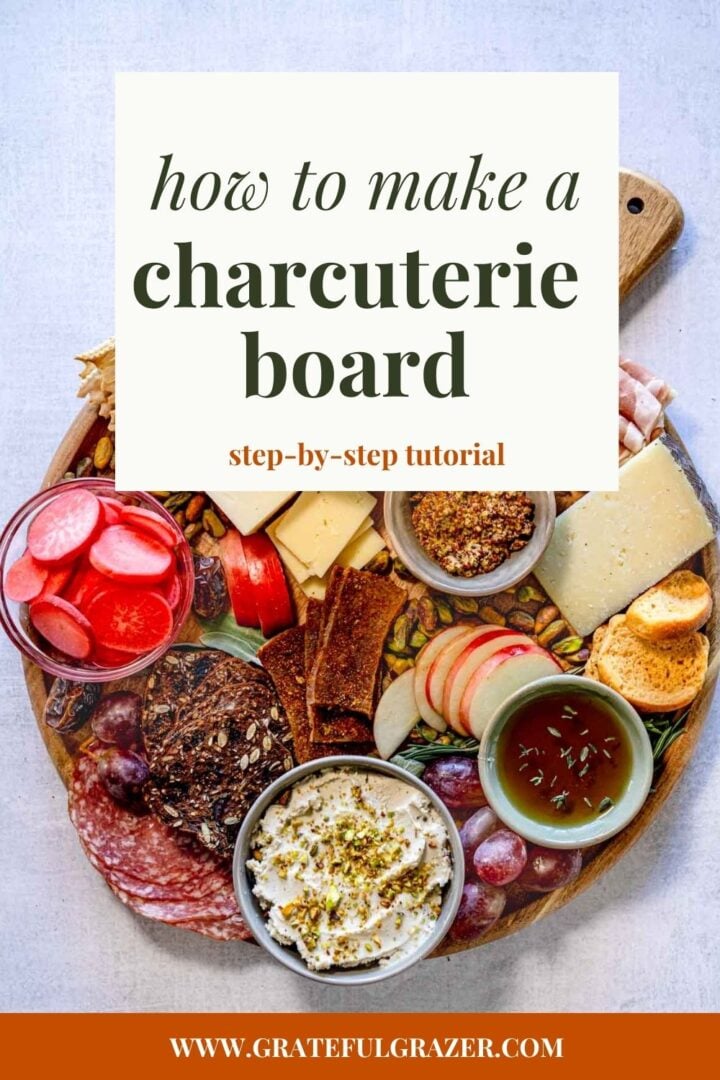
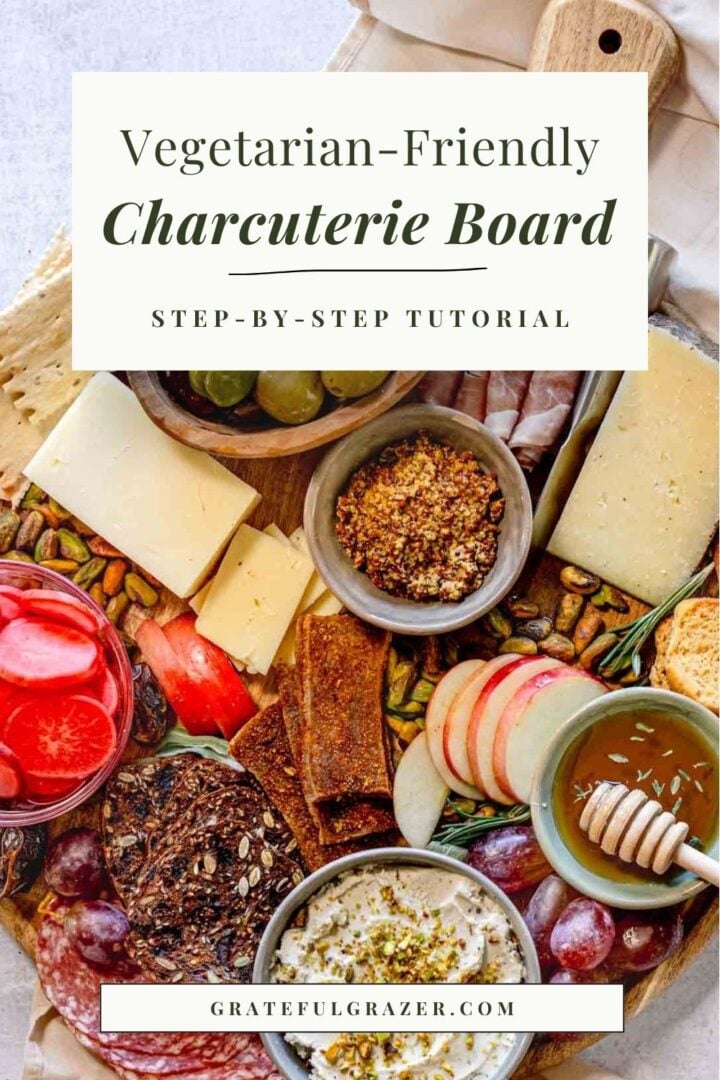
Charcuterie boards aren't just for special occasions. They're a versatile, visually stunning way to bring people together over food. Whether you're hosting a holiday gathering, a cozy evening with friends, or a casual dinner party, a thoughtfully composed snack board can be the centerpiece of any get-together. The best part? You don't have to be a chef (or food stylist!) to create something impressive. With a few tips and tricks, you can make a beautiful charcuterie board that's enjoyable for everyone.
As a dietitian and intuitive eating counselor, I love helping clients and readers explore balanced, joyful eating, and charcuterie boards are one of the best ways to put these gentle nutrition concepts into action. Homemade snack boards combine different flavors and textures in a way that's fun, social, and inclusive for everyone.
Jump to:
Tools and Equipment
You don't need much to create a stunning snack board, but a few basics make the process easier:
- Board or platter: Wooden cutting boards, slate boards, marble boards, or large platters work well.
- Knives and cheese knives: For slicing cheeses, meats, and fruits.
- Small bowls or ramekins: For spreads, dips, and softer cheeses.
- Small spoons and tongs: For serving nuts, olives, and small bites.
- Optional: Garnishes like fresh herbs or edible flowers for presentation.
Overwhelmed by "What's for Dinner?"
Get a free guide with 100+ plant-forward meal and snack ideas, organized so you can actually use them on busy weeknights and beyond.
An Inclusive, Flexitarian Approach
While traditional charcuterie boards often focus on cured meats and cheese, you can take a flexitarian approach and include plant-based and vegetarian-friendly options alongside meats. This ensures everyone at your table has something to enjoy, and it also helps balance flavors and textures.
- Proteins: Include a mix of meats, plant-based spreads, roasted chickpeas, or even dried tofu jerky.
- Cheese: Offer a variety (more on this below) with both traditional and plant-based options. For example, swap in a nut-based cheese alternative for dairy-based soft cheese.
- Fruits and veggies: Fresh, roasted, or pickled produce adds color and a variety of flavors.
Want to practice a flexible approach to vegetarian eating? Check out my post about intuitive eating as a vegetarian.
Building Your Board: Step-by-Step Tutorial
1. Choose Your Board

Start with a board, platter, or large cutting board. Make sure it's clean and dry.
2. Start with Cheeses
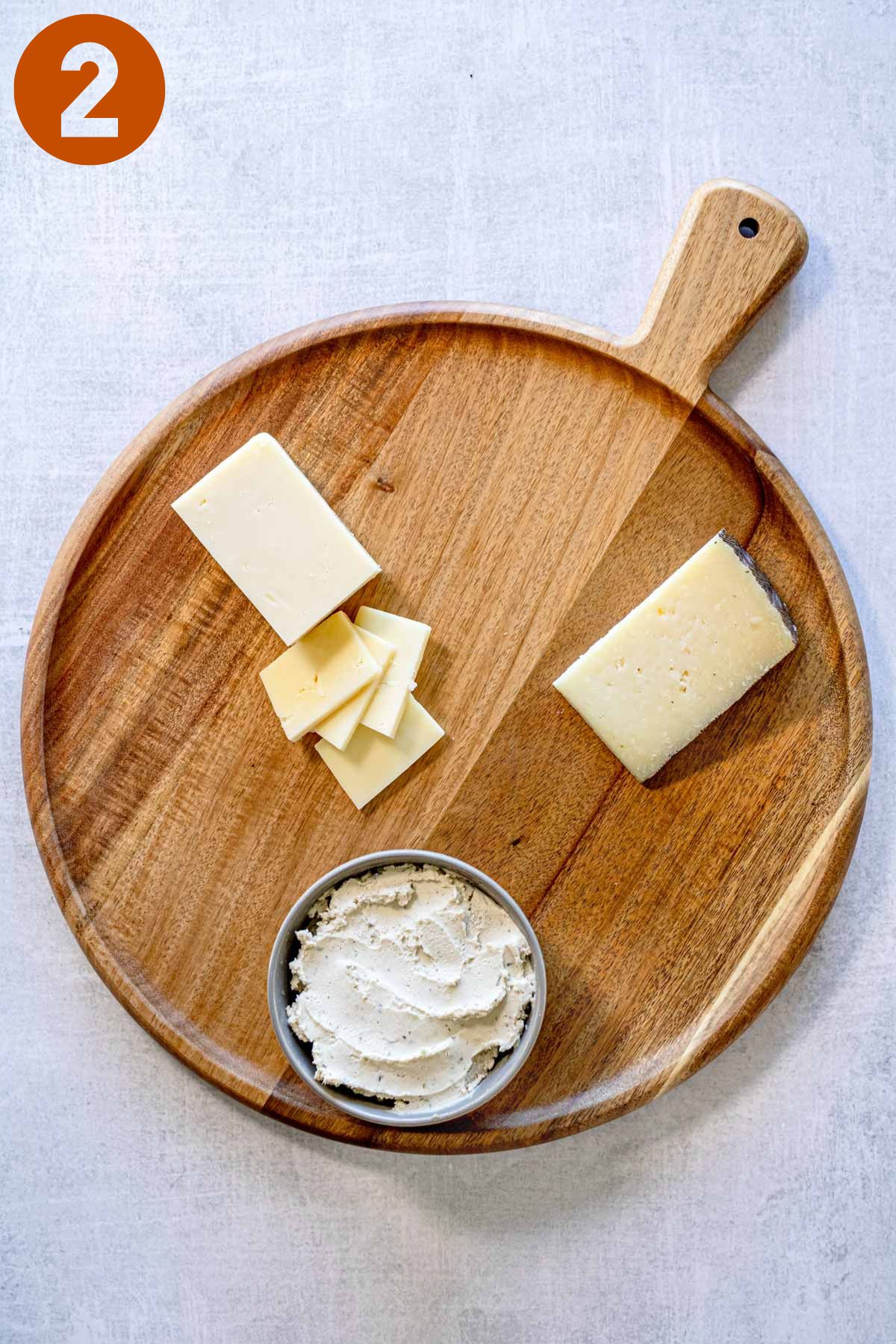
To start, anchor the board with an odd number of cheeses. Choose 3 or 5 varieties, depending on the total number of people you're serving. Pick a variety of soft, semi-soft, semi-firm, and hard cheeses.
- Soft cheeses: Soft cheeses are cream cheeses or fresh cheeses that are spreadable or crumbly. Some common soft cheeses are Brie, Camembert, ricotta, fresh goat cheese (chevre), feta cheese, cream cheese, and mascarpone. Many plant-based soft cheese spreads can also work in this category.
- Semi-soft cheeses: Semi-soft cheeses can easily be sliced or cubed. Some common examples include Havarti, Monterey Jack, Colby, Muenster, pepper jack, Gorgonzola, and Stilton.
- Semi-firm cheeses: Also known as semi-hard cheeses, these varieties fall in between semi-soft and hard cheeses. Examples include provolone, Swiss (Gruyere or Emmental), cheddar, and Gouda.
- Hard cheeses: Hard cheeses (also called firm cheeses) have been aged for several months or years, and have a rich, complex flavor. Examples include Asiago, Parmesan, Romano, Manchego, and sharp aged cheddar.
For the most visual appeal, cut some cheeses into slices, leave some in wedges, and serve a soft cheese in a small bowl for spreading. Include both traditional and plant-based options for inclusivity.
3. Add Dips, Spreads, and Other Bowls

Save This for Later
Free. Unsubscribe anytime.
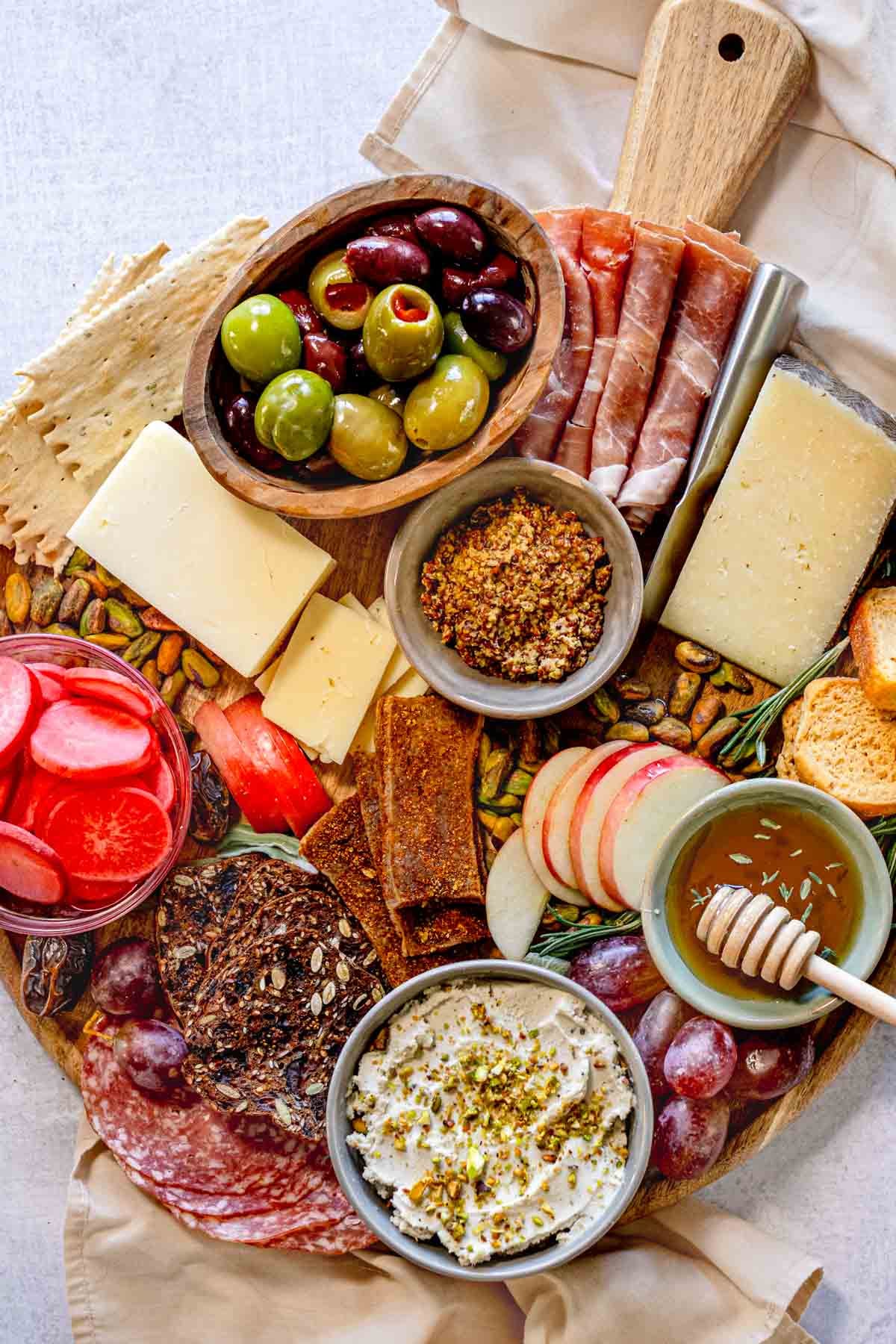
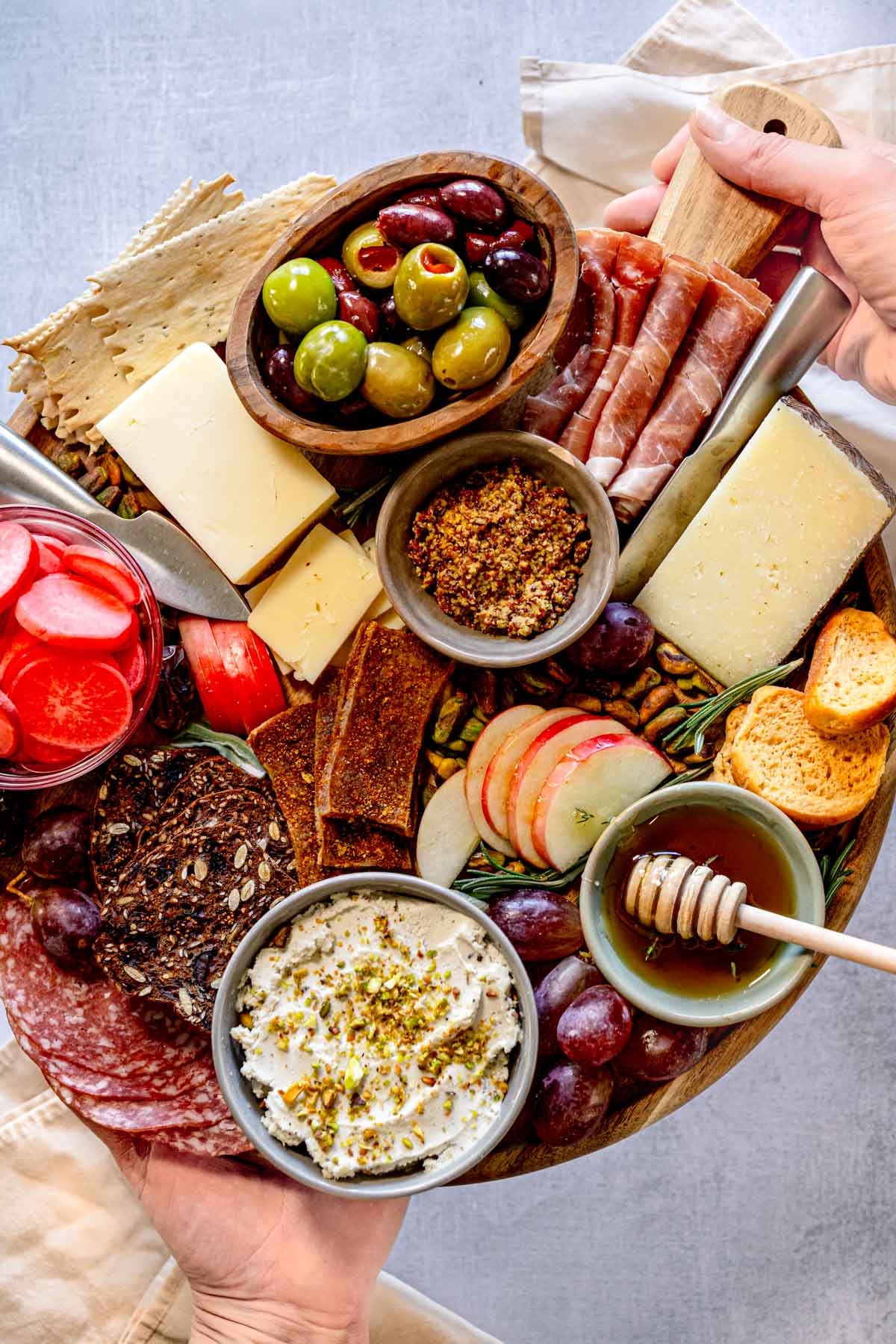
Arrange bowls around the cheeses, placing any condiments that pair well with a specific type of cheese close by to guide your guests. Hummus, olive tapenade, whole grain mustard, fruit spread, pesto, or honey all work well. Include a mix of sweet and savory condiments for variety. Then add in bowls with nuts, olives, pickled vegetables, or roasted chickpeas for color, texture, and additional flavor notes. For added interest, sprinkle condiments and spreads with chopped nuts or fresh herbs. (I like to top soft cheese spreads with finely chopped pistachios and add some fresh thyme to honey, for example.)
4. Pick Your Proteins

For a traditional board, include at least 3 types of cured meats, like prosciutto, salami, or soppressata. For a vegetarian-friendly board, swap in tofu jerky or plant-based deli slices for one of the meats. Place vegetarian substitutes so they aren't touching meat for vegetarian guests.
5. Arrange Crackers and Breads

Add three types of crackers and breads. Breadsticks, crackers, crostini, flatbreads, or pita chips add texture and provide a vehicle for cheese, spreads, and protein. Include a gluten-free cracker option for inclusivity.
6. Add Fruits and Vegetables

Fill in the gaps with a mix of at least three types of fresh, dried, roasted, or pickled produce. Fresh fruits like grapes, figs, pomegranate seeds, or apple slices provide sweetness, while dried fruits like apricots or dates lend chewiness and concentrated flavor. Fresh vegetables bring a satisfying crunch, while pickles add acidity and texture, and roasted veggies bring warm, caramelized flavor. To prevent browning, sprinkle sliced fruits like apples or pears with lemon juice before adding them to the board.
7. Fill in the Gaps

After arranging the items in small clusters, begin to fill in the gaps with herbs, nuts, or other small garnishes. Balance the color, texture, and height of the various elements to make the board more inviting. Don't forget small spoons, cheese knives, and other utensils for serving!

Making Ahead and Storage
Charcuterie boards are best assembled the same day you plan to serve them. However, you can prep many of the components in advance.
- Slice cheeses and meats 1-2 days ahead, keeping them wrapped and stored in airtight containers.
- Roast vegetables or prep spreads 1-2 days ahead.
- Make pickled vegetables 1-2 weeks ahead.
- Wash and dry fresh produce the day before.
Once assembled, cover loosely with plastic wrap and store in the fridge for up to 6 hours. Avoid making the board too far ahead, as fresh ingredients can wilt or lose texture.
Charcuterie Board-Friendly Recipes
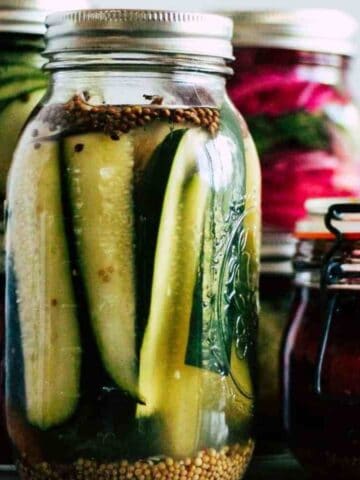

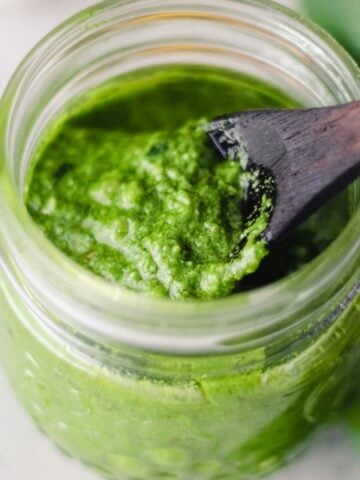

FAQ
The 3-3-3-3 rule is an easy guideline for balancing snack boards: 3 types of cheese, 3 types of meat, 3 types of fruit, and 3 types of crackers or bread.
Avoid overcrowding, including too much of a single flavor, wet ingredients that can make crackers soggy (serve these in bowls), skipping utensils, and igoring guests' dietary preferences.
Include cheeses (soft, semi-firm, and firm), meats (or vegetarian alternatives), fresh and dried fruits, vegetables or pickles, nuts, bread or crackers, and dips or spreads.
"Charcuterie" comes from the French chair (flesh) and cuit (cooked), originally referring to prepared meats.
📖 Recipe
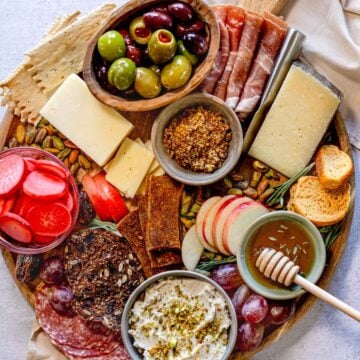
Charcuterie Board Step-By-Step Tutorial
Save This Recipe for Later
Free. Unsubscribe anytime.
Ingredients
Cheeses (choose 3 or 5 varieties)
- Soft cheese (Brie, Camembert, ricotta, chevre, feta cheese, cream cheese, mascarpone, or plant-based soft cheese spreads.)
- Semi-soft cheese (Havarti, Monterey Jack, Colby, Muenster, pepper jack, Gorgonzola, or Stilton.)
- Semi-firm cheese (Provolone, Gruyere, Emmental, cheddar, or Gouda.)
- Hard cheese (Asiago, Parmesan, Romano, Manchego, or sharp aged cheddar.)
Spreads and Condiments (choose at least 1 of each)
- 1 Sweet spreads and condiments (honey, fruit preserves)
- 1 Savory spreads and condiments (hummus, pesto, mustard, tapenade)
- 1 Small bites (nuts, olives)
Proteins (choose 3 types)
- 3 Sliced cured meats or meat alternatives (prosciutto, salami, tofu jerky, plant-based deli slices)
Crackers and breads (choose at least 3)
- Crackers (whole grain, seeded, gluten-free)
- Bread (baguette slices, breadsticks, crostini)
Fruits and vegetables (choose at least 3)
- Fresh (grapes, apple slices, pear slices, cherry tomatoes)
- Pickled (cucumber, onions, radishes, carrots)
- Dried (figs, dates, apricots)
- Roasted (red bell peppers, zucchini, mushrooms)
Garnishes and Extras
- Herbs and garnishes (rosemary, thyme, sage, basil, edible flowers, additional nuts)
Instructions
Arrange the cheeses:
- Place each cheese on the board spaced apart. Include a variety of wedges, sliced cheeses, and soft spreads.
Add spreads and condiments:
- Arrange bowls of spreads and bowls of nuts or olives around the cheeses.
Add proteins:
- Fold or roll cured meats and arrange them near cheeses. Include vegetarian proteins on a separate area if desired.
Arrange crackers and breads
- Fan or stack crackers and bread slices. Place any crackers or breads that pair well with specific cheeses or meats nearby to guide guests.
Add fruits and vegetables
- Fill gaps with fresh, pickled, and roasted/dried fruits and vegetables. Aim for color and texture variety.
Finish with garnishes
- Finish with garnishes like fresh herbs, edible flowers, or additional nuts for visual appeal. Serve immediately for optimal freshness.
Notes
- Vegetarian-friendly: Keep vegetarian items separate from meats.
- Making-ahead and storage: Many components can be prepped or sliced a day ahead, including pickles, spreads, and sliced cheeses. Store prepped ingredients wrapped in airtight containers until ready to assemble. Assemble charcuterie board the day you plan to serve it for optimal freshness. If needed, assemble the board up to six hours ahead. Cover lightly with plastic wrap and store in the fridge until ready to serve.
- Assembly tips: Use varying textures, colors, and heights to make your board visually appealing.