40 Things I've Learned About Food (For My 40th Birthday)
This week I turned 40. It's still a little bit hard to believe, because life really is happening in all of these little moments that somehow add up to months and years and decades before we know it. At the last minute, I decided I wanted my whole family around me and my favorite meal, tofu palak at the local Indian restaurant, over anything fancier. It was intentionally simple in the best possible way. Just good food and the people I love most.
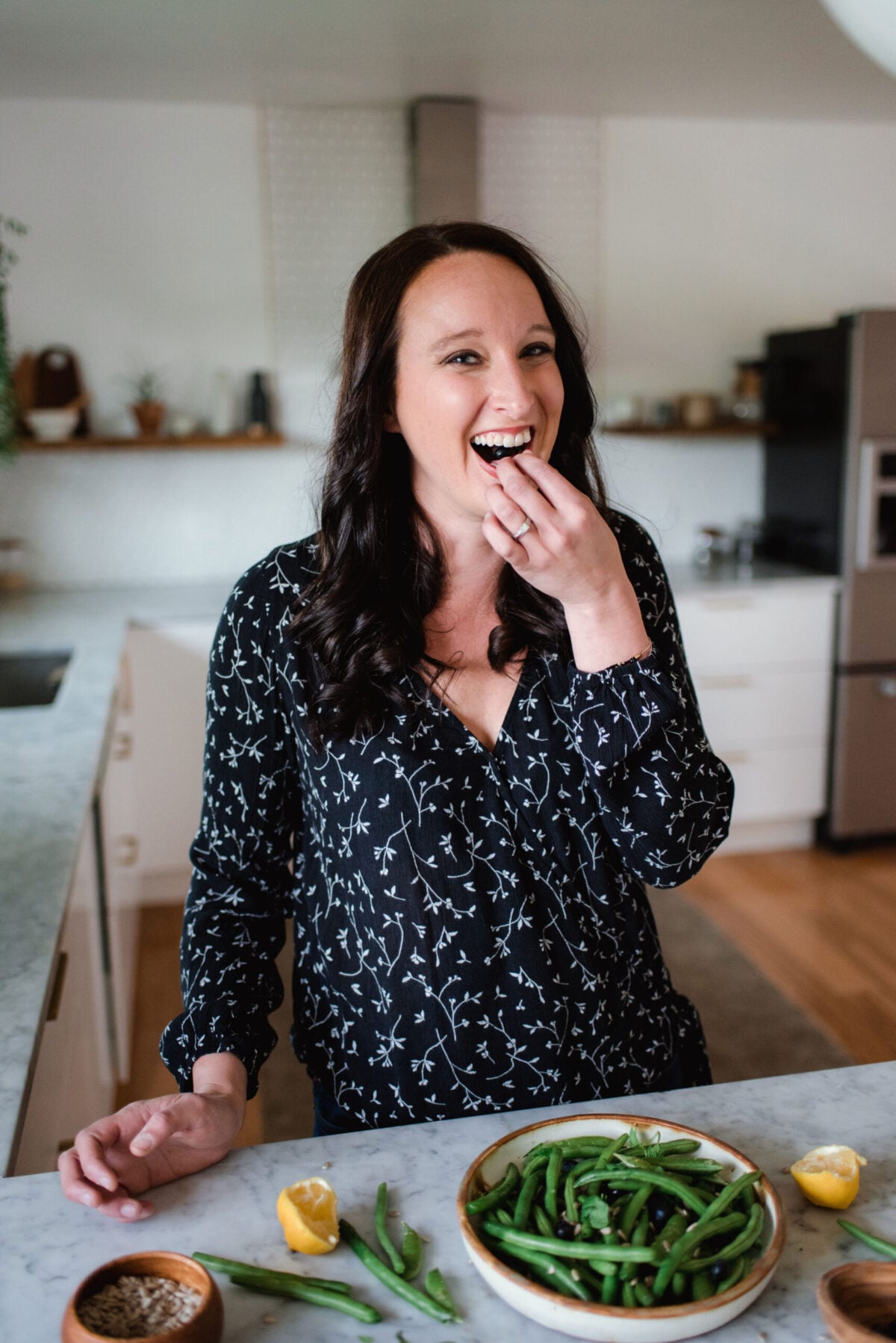
I'm Stephanie McKercher, a registered dietitian, certified intuitive eating counselor, and the person behind Grateful Grazer, where I share plant-forward recipes and food freedom content from a non-diet perspective.
There's something about a whole new decade that feels like a real reset. Not a "new year, new me" reset, more like a chance to actually look at what you've built and what you believe, and feel hopeful about where it's all going.
In that spirit, I wanted to mark this decade with something a little different: 40 things I've learned about food and nutrition over 40 years. Some from years of recipe development, some from my work as a dietitian, and a lot from just living, eating, and healing my own relationship with food. There's a mix of practical kitchen stuff and bigger-picture food philosophy. I hope something on this list is useful to you, and I'd love to hear from you if it is.
Jump to:
In the Kitchen
- Pre-boil tofu before you cook it. Drop cubes into salted boiling water for a few minutes, drain, and pat dry. The texture is firmer, it holds up better in stir-fries and curries, and it doesn't need pressing. This changed how I cook tofu entirely.
- Balance isn't just about nutrients. A great dish has a balance of flavors and textures too: salt, fat, acid, a touch of sweet, heat if you want it, something crunchy, something creamy. When something tastes off, run through that list to get a feel for what might be missing.
- Acid is the move when something tastes flat. Before you add more salt, try a squeeze of lemon, a splash of vinegar, or a spoonful of something bright. It changes everything.
- You eat with your eyes first. Color, presentation, a nice plate, a comfortable eating space, a handful of fresh herbs, a drizzle of good olive oil...these things matter. Not because food needs to be Instagram-worthy, but because making eating feel like an experience worth having is part of actually enjoying it. Diet culture stripped the beauty out of eating and called it discipline. Let's reclaim it.
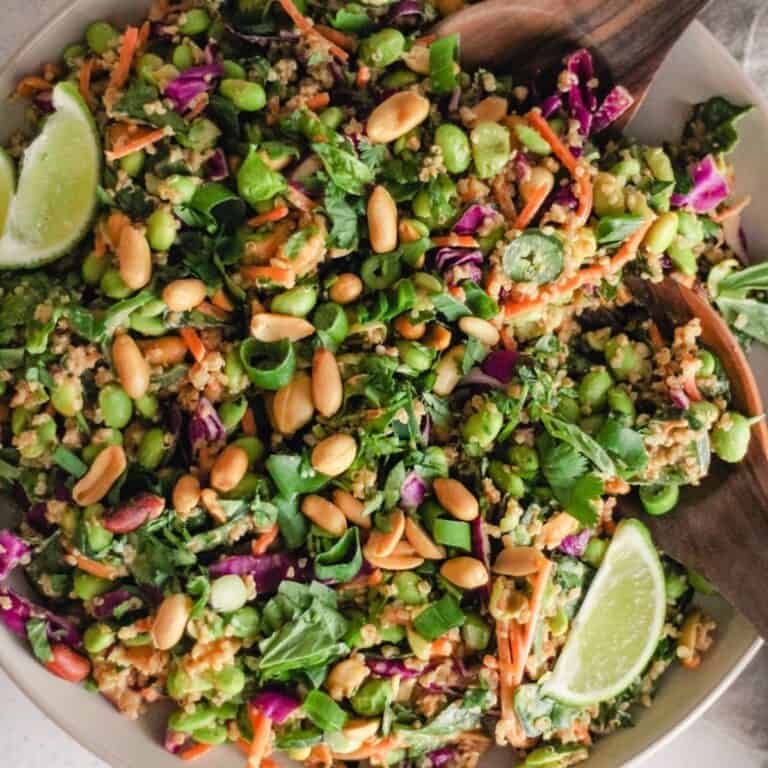
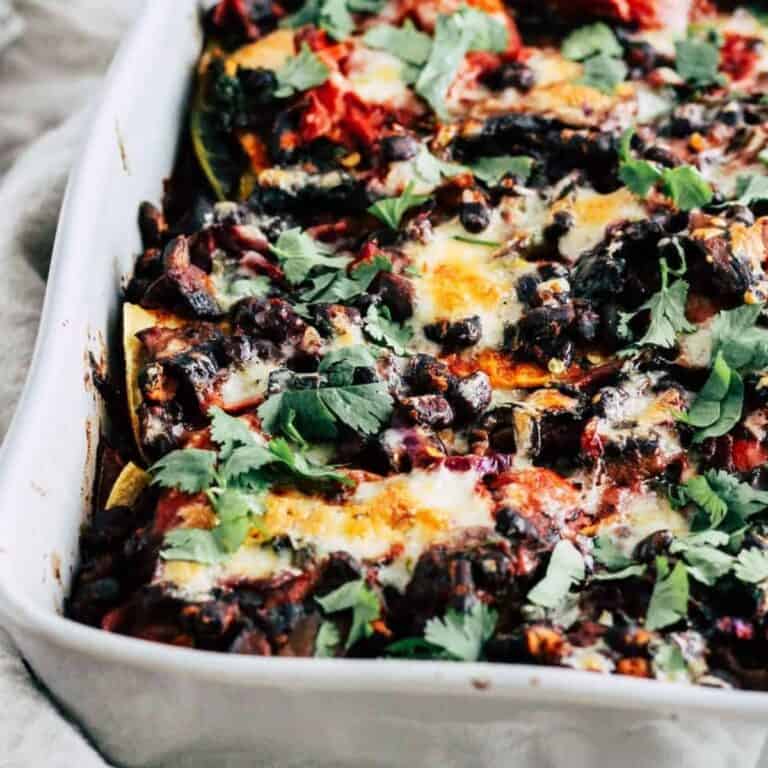
- Keep a few SOS meals in your back pocket: the ones you can make without thinking, with ingredients you always have on hand. Mine are pasta with veggies and creamy marinara, black bean tacos, baked tofu rice bowls, edamame peanut noodles, and, when I'm really not feeling it, frozen pizza. Having these means there's always something good to eat, even on the hardest days...especially on the hardest days.
- Batch cook and freeze. Cook a big pot of chili, a tray of roasted vegetables, and a batch of grains. Future you will be grateful. This is one of the most underrated forms of boring yet impactful self-care I know.
- Cook meals that turn into something else the next day. Roasted vegetables become a grain bowl. Extra beans become tacos. Leftover rice becomes fried rice. This isn't meal planning in the rigid sense; it's just cooking with tomorrow in mind.
- Frozen vegetables are real vegetables. Frozen peas, edamame, corn, and spinach are often more nutritious than fresh because they're frozen at peak ripeness. Keep them stocked and use them without apology. My go-to is this frozen veggie stir-fry.
- Legumes are one of the most underrated ingredients in any kitchen. Lentils, chickpeas, black beans, white beans...they're affordable, filling, endlessly versatile, and truly delicious when cooked well. Canned is completely fine. Rinse them, season, and nobody will know or care that they didn't simmer on your stove for two hours.
- Roast vegetables at high heat: 425 to 450 degrees Fahrenheit. Caramelization is the goal and you can't get there at 350.
- Eating seasonally makes food taste better, costs less, and naturally adds variety to what you're cooking throughout the year. A tomato in August and a tomato in February are not the same tomato. Let the season guide you.
- You don't need every kitchen appliance out there. But an air fryer is worth it. Crispy tofu alone justifies the counter space.
- Nutritional yeast belongs in more things than you think. Pasta, popcorn, roasted vegetables, soups...it adds a savory depth that's hard to replicate.
- Hemp seeds are the easiest protein add-in nobody talks about enough. Mild, they blend into almost anything, and three tablespoons give you around 10 grams of protein. This strawberry banana smoothie is a family favorite.
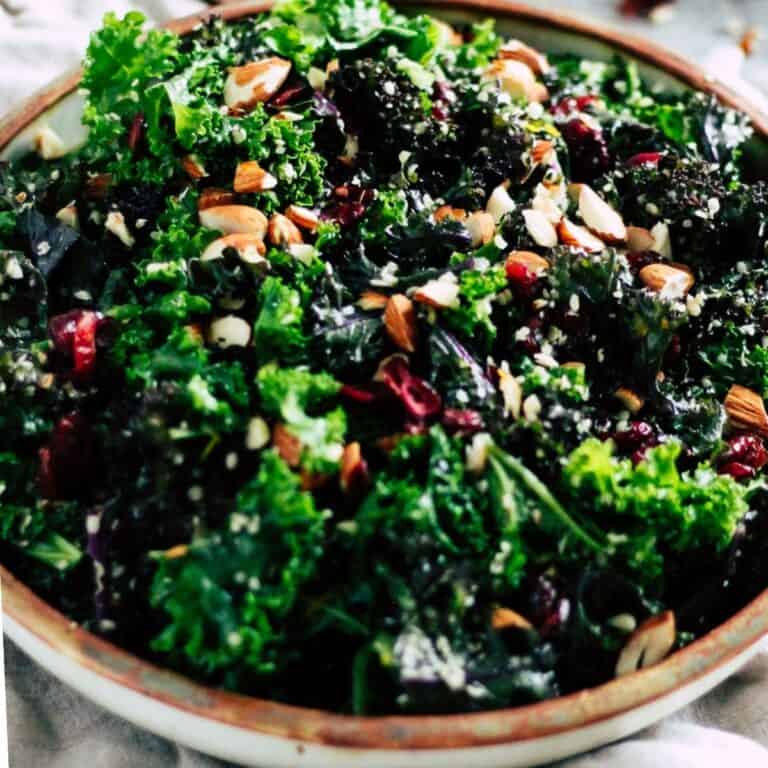
- If you're bored with salads, you're probably under-dressing them. A generous amount of a really good dressing changes the whole experience. My go-tos: garlicky lemon tahini dressing and hot honey mustard vinaigrette.
On Eating Well
- Eating consistently is one of the most underrated things you can do for your relationship with food. Skipping meals, eating too little during the day, or going long stretches without eating sets up the restrict-binge cycle more reliably than almost anything else. Your body needs to trust that food is coming. Regular, adequate eating isn't a diet strategy; it's the foundation everything else is built on.
- Your body already knows how much to eat. The problem is we've been taught to outsource that knowledge. Calorie counts, tracking apps, portion rules...these all work by replacing your internal signals with external ones. The work of intuitive eating is learning to trust what's already there. Hunger is information. Fullness is information. They're not perfect signals, and they take time to reconnect with, but they're yours, and they're more reliable than any app.
- The healthiest vegetable is the one you'll actually eat. If dipping it in ranch makes you more likely to eat it, then ranch is the healthiest option for you.
- Processed food has a place. The idea that processed automatically means bad is one of the most pervasive pieces of nutrition misinformation out there. Canned beans, frozen vegetables, jarred pasta sauce, a frozen pizza, Oreos...these are not failures. They're practical, they're often delicious, and they make consistent eating possible for real people with real lives. The goal is a nourishing relationship with food overall, not a perfectly "clean" ingredient list. Diet culture has convinced many well-meaning people that processed foods are always bad, but that doesn't make it true.
- Variety matters more than only eating organic. A wide range of fruits and vegetables does more for you than a perfectly curated list of 100% organic ingredients. Eat the non-organic apple, the non-organic pear, the non-organic berries. Just eat the fruit.
- Satisfaction is an actual nutritional outcome. A meal that leaves you feeling satisfied, physically and emotionally, nourishes you in a way that a meal you eat joylessly while scrolling on your phone does not. Pleasure isn't optional. It's part of what makes food nourishing.
- A balanced snack plate absolutely counts as a meal. Cheese, crackers, fruit, whatever's in the fridge...if it's satisfying and it works for you right now, it's dinner. Meals don't have to be cooked from scratch to count.
- Your body doesn't care if you eat dinner food for breakfast or breakfast food for dinner. Follow what actually sounds good.
- Sometimes cooking is boring. Not every meal is inspired or beautiful or worth posting. Sometimes it's just Tuesday, and you made something unremarkable, ate it, and moved on. That consistency (feeding yourself regularly, without drama, even when it's not exciting) is a foundation of gentle nutrition.
Save This for Later
Free. Unsubscribe anytime.
On the Hard Stuff
- Knowing what to eat and actually feeling at peace with food are completely different things. Most people who struggle with food know exactly what they "should" eat. Nutrition knowledge usually isn't the real problem.
- If you're a stress eater, get curious instead of critical. Ask yourself: what is eating doing for me right now? What need is it serving, or trying to serve? Sometimes the answer is physical: you haven't eaten enough, and your body is catching up. Often, it's emotional eating: seeking comfort, distraction, control, or just a moment of pleasure in a hard day. Either way, curiosity gets you further than shame.
- Bingeing isn't a character flaw. The binge-restrict cycle is a predictable physiological response to restriction. Understanding that changes everything.
- Telling yourself you have permission to eat something and actually feeling free to eat it are different things. The first can happen in a moment. The second takes time and often some personalized support.
- If you've tried intuitive eating and still feel obsessed with food, that doesn't mean the framework can't work for you. Obsessive food thoughts are often a sign of restriction, even a subtle, unintentional restriction that's running in the background.
- The goal of intuitive eating isn't to stop caring about nutrition. It's to stop being at war with it.
- Eating past comfortable fullness sometimes is normal. It doesn't mean you failed at anything.
- Recovery isn't linear. A hard week with food doesn't erase the progress you've made. It's information, not evidence that you're back to square one.
- The way someone feels about eating matters as much as what they're eating. Stress, shame, and anxiety around food have real effects on how we experience and digest it. You can eat all the right things and still feel terrible if your relationship with food is broken.
- Shame makes everything harder. Around food, your body, and asking for help. Shame rarely leads to change. It's usually what keeps you stuck.
- Nutrition is one piece of a much larger picture. Food choices happen inside real constraints: budget, access, time, culture, geography, stress, systemic inequity. The social determinants of health (where you live, work, and what resources you have access to) shape what and how people eat far more than personal willpower or knowledge ever could. Eating well doesn't mean eating perfectly. It means doing what you can with what you actually have, and being kind to yourself about the rest. Anyone who tells you your health is entirely in your own hands is leaving out essential pieces of the puzzle.
On Plants
- Plant-forward is a description of the food I love, not a prescription for what I think you should eat. Meat at every meal, wonderful. All plants, great. What matters is that eating feels good: nourishing, satisfying, and actually yours.
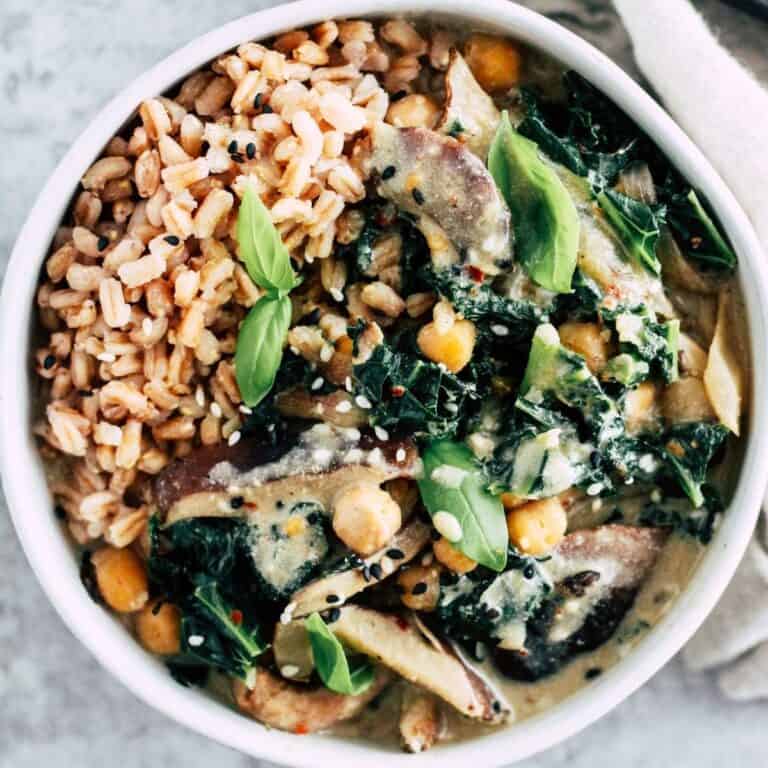
- It isn't superficial to care about how your food looks. The thing I love most about cooking plant-forward is the color. A purple cabbage slaw, a bowl of golden lentil soup, a plate of roasted carrots, or a grain bowl with something green. There's a visual joy to plant-based cooking that I don't think gets talked about enough.
- Ethical eating includes being compassionate toward yourself. Wanting to eat in a way that feels good for the planet, for animals, for your community... that's a beautiful impulse. And it has to include you. Real life comes with real constraints: budget, access, time, culture, a hard week, a hard season. Doing the best you can within those constraints, without shame about the rest, is what ethical and compassionate eating actually looks like.
- Plant-based eating, when it comes from a place of genuine enjoyment rather than control, can be one of the most satisfying ways to eat. When it comes from rules and restriction dressed up as wellness, it can't. Recognizing that difference is important.
- The way I eat is just my version of food freedom. Yours gets to look completely different. That's the whole point.
Okay, that's 40, and wow, I feel like I could have included 40 more. A lot of what I know about food I learned the hard way: through my own recovery, through years of cooking, and through the privilege of working with people who trust me. I'm heading into this decade with a clearer sense of what I believe about food than I've ever had, and so curious about what the next 40 years will teach me.
If something on this list resonated and you want to keep exploring, the free 5 Days to Food Peace series is a good place to start. And if you're ready to work on your own relationship with food, my virtual practice is open.
Here's to eating well, whatever that looks like for you.
Eating well shouldn't feel like a second job
Join my free 5-Day Food Peace email series and start taking the first steps toward a balanced, flexible, and enjoyable relationship with food.